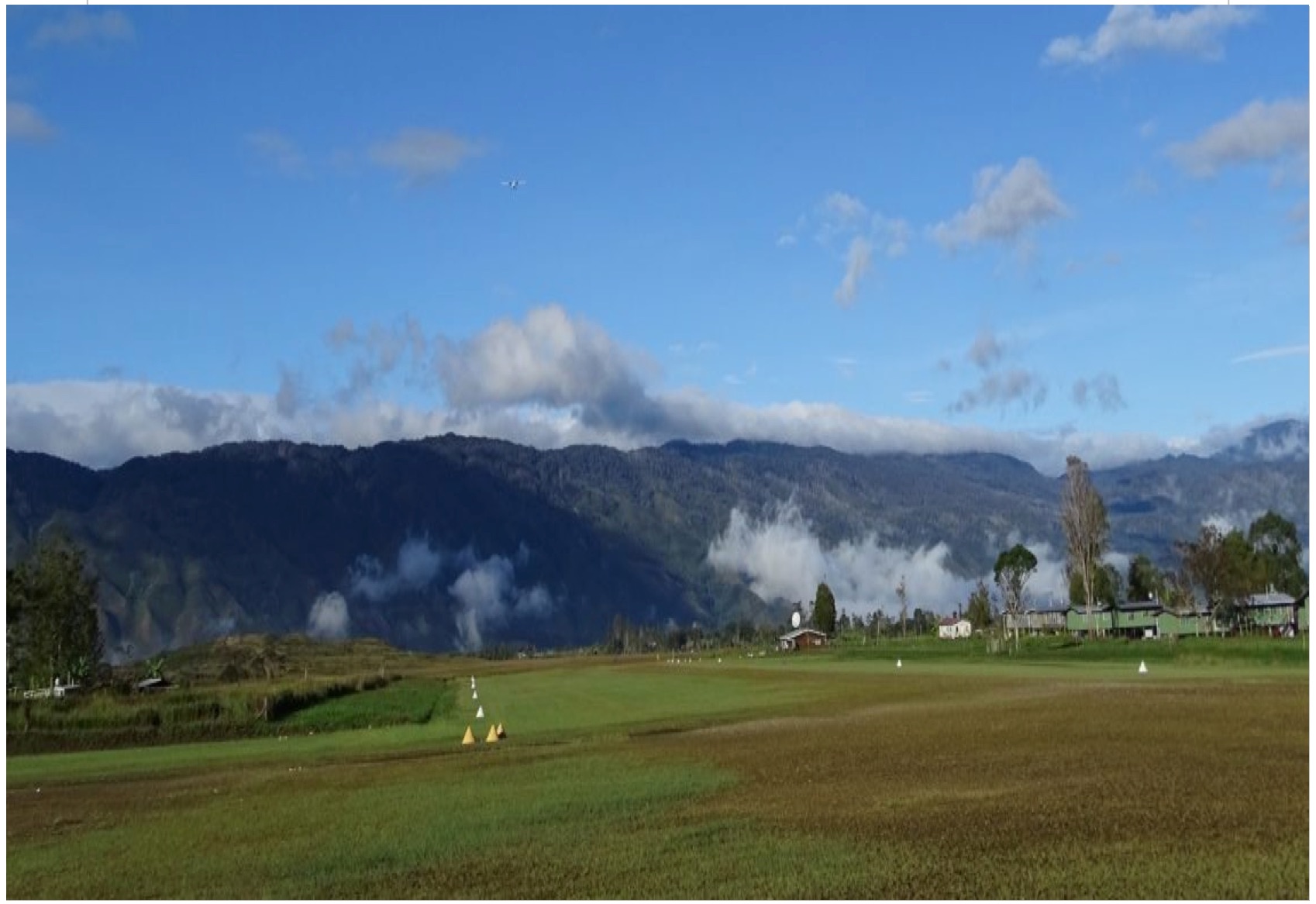
Several years ago, I found myself in Telefomin District in the Sandaun Province. It was a few months before the 2002 elections and politicians and their teams were on the campaign trail.
I thought I had a fair understanding about my own country. But Telefomin taught me otherwise. We arrived on a MAF flight in Telefomin airstrip and spent the night a small semi-abandoned guest house.
At 5am the next morning, we headed off West to Urapmin, a small village on the neighboring ridge. It appeared deceptively close on the maps. I carried a backpack with nearly 8 kilograms supplies enough for three days with some camera gear.
The first part of the journey looked ok. The track was on relatively even ground until we got to a place called Atemkiakmin. Then the decent began.
I had little help and the backpack was killing me going downhill. Rain began falling in a drizzle. Blessings from heaven, they said. The road became slippery and in some places, the mud was knee deep. Our initial destination was the bank of the headwaters of the Sepik River.
It took us seven hours before we reached the Sepik headwaters. After stopping for a water break, the guide told us we had another longer journey ahead and that we had to move quickly.
By midday we were climbing up a shadeless, grassy mountain side. The heat was murderous while nature compensated us with spectacular views of the cliffs and the Telefomin Valley.
By 5.30pm, the track became easier and some of the first houses of the Urapmin community began appearing in the distance. We picked up pace. My body had been pushed beyond its limits and every step hurt like hell.
When we got to Urapmin Primary School at 6pm we were hosted by the kind head teacher who was also our guide.
What’s the point in telling you this story?
The teachers and students make this journey every month when supplies are brought in to Telefomin. Every month, when a teacher travels into Vanimo to get school supplies, another gets the troops ready to carry the cargo back to Urapmin.
The ‘troops’ are not all adults. Most are children, fast and nimble on their feet able to maneuver playfully through the jungles and mountainsides quicker than adults.
Over the years, the teachers found that it was much easier taking a class of 30 kids and spreading the load amongst everyone. So if there are several cartons of food and exercise books, one kid would probably end up carrying anything between 500 grams and 2 kilograms of cargo back to Urapmin.
Many of the kids who make the journey are between 10 and 13. Sometimes, the younger ones disobey their parents and make the journey as well. Nobody complains.
Over the course of the night, the head teacher told of how, kids desperate for an education, would travel long distances from the border areas of the Hela and Western Provinces to find a functioning school that had teachers. Stories like this sound so farfetched and exaggerated that many people living in Port Moresby would find it difficult to comprehend.
In our cities, we have kids who don’t want to go to school on time. We see kids who have the luxury of public transport, uniforms and shoes dragging their feet to school. In districts like Telefomin, education itself is a precious luxury. Kids would give anything to sit in a classroom and learn.
If you are a teacher in places like Urapmin, you need to have a spirit made of iron. You have to deal with girls who are forced to marry because a school has been closed for years. You are by default, the resident medical officer when there are emergencies. You deliver babies and treat wounds. You are there when one of your students die because of the lack of primary health care.
The role of the rural teacher extends beyond just the classroom. It is for those reasons that I get so pissed off when rural teachers are mistreated by people sitting in air-conditioned offices in Port Moresby.