
Papua New Guinea’s declaration of a National HIV crisis is more than a policy announcement. It is a recognition of a dangerous resurgence of infections and a warning that the country’s already-strained systems are about to come under even greater pressure.
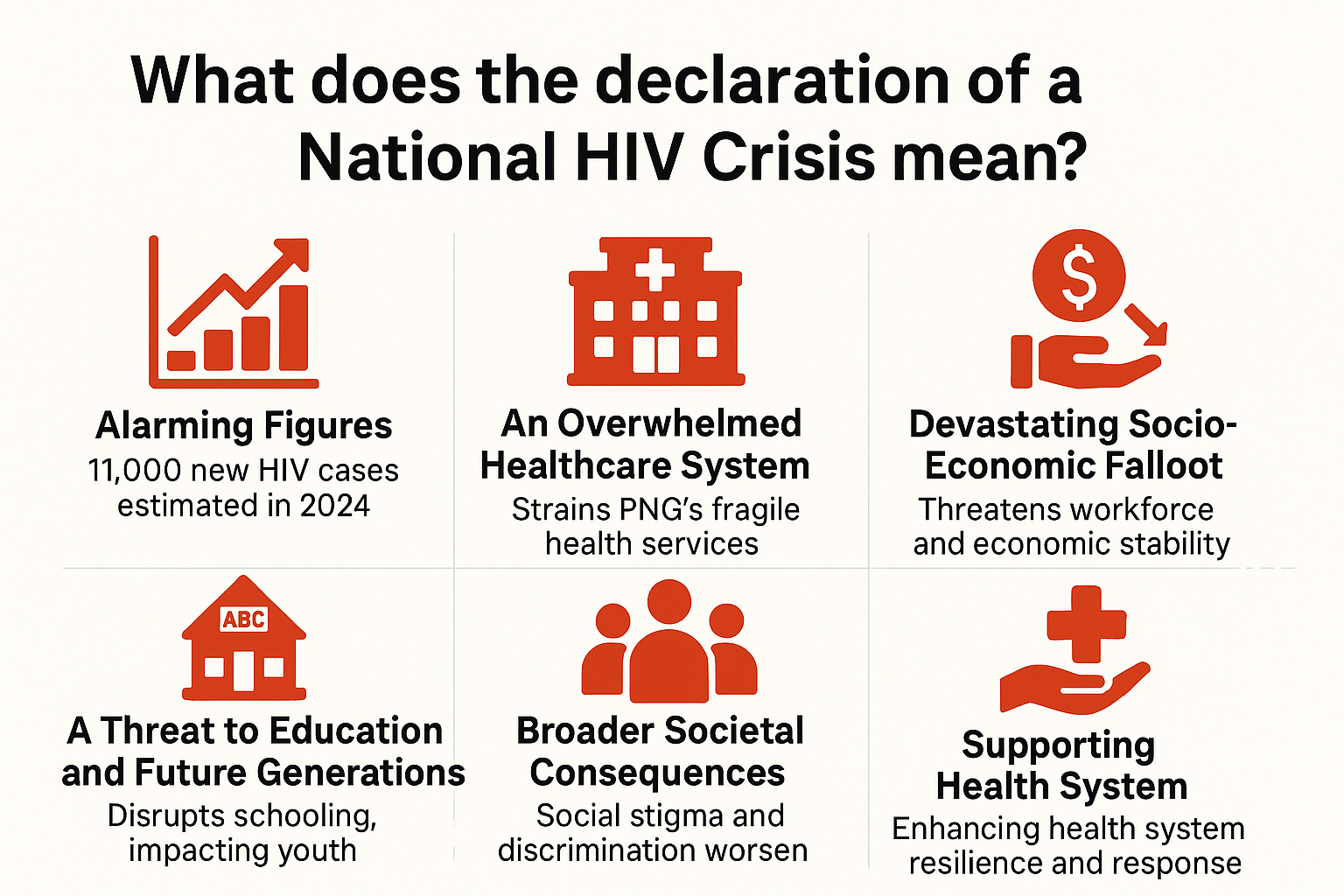
With an estimated 11,000 new HIV cases in 2024, PNG has effectively doubled national infections since 2010. Health Minister Elias Kapavore has described HIV as a “disease of inequality”—a reminder that the epidemic is deeply connected to poverty, gender inequality, and limited access to essential services.
An Overloaded and Under-Resourced Health System
The first major implication of the Papua New Guinea HIV crisis is the tightening grip on an already fragile health system. Clinics and hospitals face shortages of staff, equipment, and essential supplies. Many facilities lack the capacity to provide routine testing, counselling, or consistent Antiretroviral Therapy (ART).
Access remains uneven:
- Rural health posts frequently run out of ART.
- Viral load testing is inconsistent or unavailable.
- Second-line ART options remain limited, making treatment failure extremely dangerous.
- Reports of shortages of basic items—syringes, gloves, testing kits—further weaken the response.
As the Health Department moves to secure NEC approvals and additional donor funding, the immediate challenge will be keeping essential services operational as case numbers rise.
Socio-Economic Consequences: A Crisis Beyond the Clinic
HIV has long-term implications that extend well beyond health. In PNG, the epidemic is increasingly a development crisis.
- A rising number of infections among working-age adults reduces national productivity.
- Past projections have warned of a possible 12.5% drop in the workforce if HIV continues to rise.
- Families experiencing HIV-related illness face steep medical costs, travel expenses, and lost income.
Many are forced to sell assets, withdraw children from school or take on debt. Women—already carrying the load of unpaid care work—will shoulder a disproportionate burden as caregivers, widening gender inequality.
Threats to Education and the Next Generation
Teachers, lecturers, and other frontline education workers are also vulnerable. As the epidemic expands, schools risk losing staff to illness or to caregiving responsibilities. Students may:
- Leave school to care for sick relatives
- Drop out because families can no longer afford fees
- Experience stigma or discrimination after a parent falls ill
A generation of girls is particularly at risk of losing access to education. If trends continue, PNG could see a decline in literacy and reduced participation in the future workforce.
The Hidden Impact: Stigma, Discrimination and Human Right
Stigma remains one of the most damaging obstacles in the Papua New Guinea HIV crisis. Nearly half of people from key populations report hiding their sexual practices when seeking care, fearing discrimination or poor treatment.
This drives the epidemic underground, limiting early testing and reducing treatment adherence.
A rise in AIDS-related orphanhood will further strain family networks and social services, creating long-term welfare challenges and widening existing vulnerabilities.
A National Emergency That Demands a National Response
PNG’s emergency HIV response—supported by Australia, UNAIDS, WHO and the United States—marks an important step. But reversing the epidemic will require more than medical interventions. It demands:
- Sustained political commitment
- Increased domestic financing
- Community-led prevention and awareness
- Stronger health systems
- Reduced stigma and discrimination
- Better protection of vulnerable populations
Ending HIV as a public health threat will require a whole-of-society approach. The HIV crisis is a reminder that public health, human rights, and national development are inseparable.