Long before it became one of Papua New Guinea’s most recognisable coastal towns, Madang was already a meeting place.
This stretch of coastline, facing the Bismarck Sea, attracted human settlement for centuries because of its calm waters, sheltered harbour and fertile hinterland. Austronesian-speaking communities established villages along the coast and nearby islands, while inland peoples occupied river valleys and rugged mountain ranges. From the beginning, Madang was never a single tribe or culture, but a complex, multilingual and multi-tribal landscape, shaped by movement, trade and coexistence.
Among the coastal groups were the Bel-speaking peoples, whose villages lined the shoreline and offshore islands. For them, the sea functioned not as a boundary but as a corridor — linking Madang to wider regional networks of exchange across northern Papua New Guinea. Canoes carried people, food, shell valuables and ideas, binding communities together long before colonial borders were drawn.
Bilbil Pottery and Pre-Colonial Trade Networks
One community became particularly influential in shaping Madang’s regional economy.
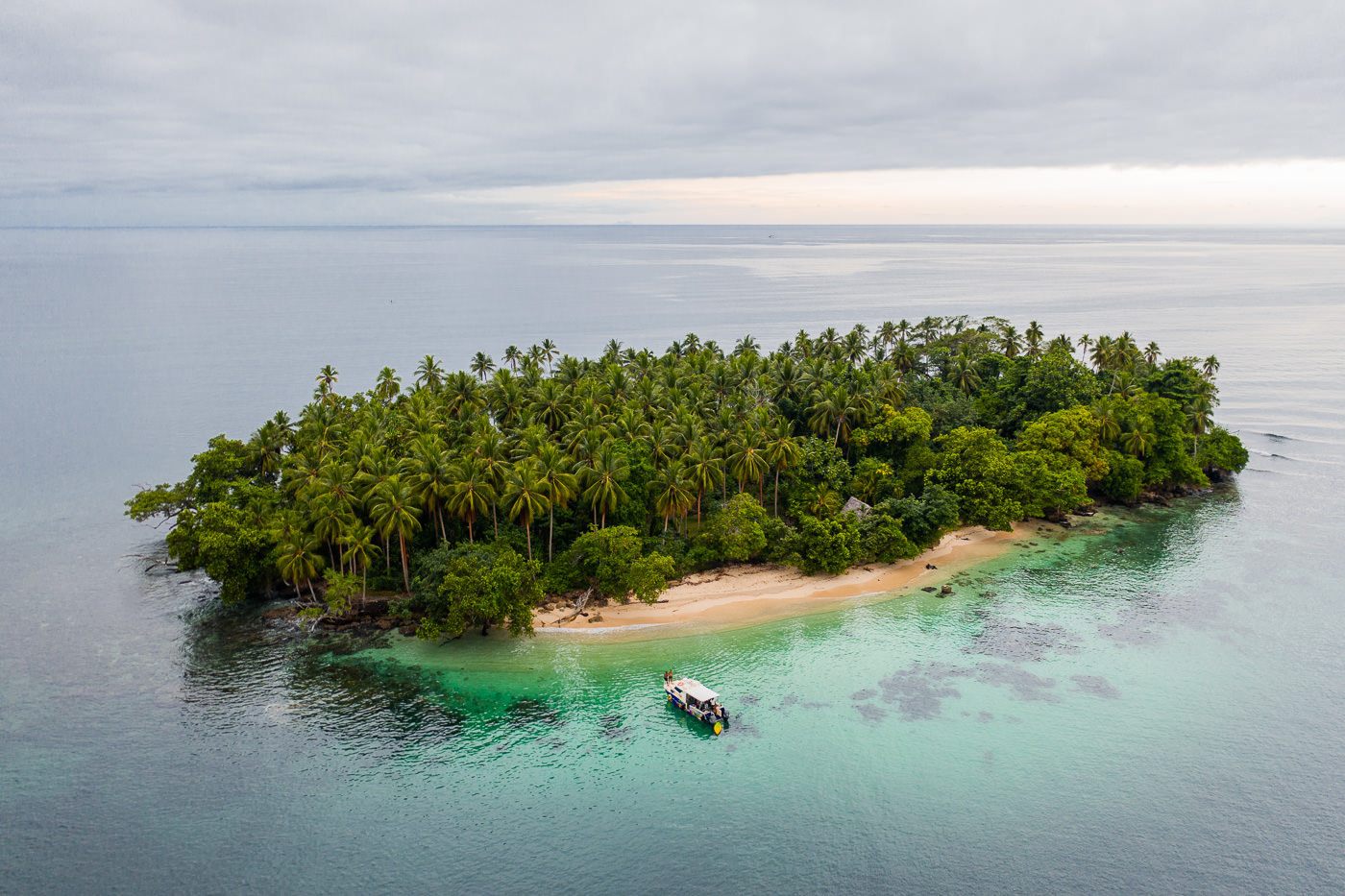
Bilbil, an island village just offshore from present-day Madang town, developed a pottery tradition that became central to pre-colonial trade. Bilbil pots — known for their durability and practicality — were widely exchanged along the north coast and deep into the interior. They were traded for sago, taro, pigs and forest products, forming an economic system that existed centuries before the arrival of Europeans.
Pottery production was embedded in social structure, knowledge transfer and ceremonial exchange. The continued making of Bilbil pottery today stands as a living reminder that Madang’s earliest economies were sophisticated, locally controlled and deeply interconnected.
Inland Peoples, the Raikos and a Multilingual Province
Madang’s history does not belong to the coast alone.
Beyond the shoreline lie the forested ranges and river systems of the interior, home to numerous language groups, including the Raikos people. The Raikos occupied inland territories south and west of Madang, maintaining trade routes that linked the mountains to the coast. Through these routes, inland and coastal communities exchanged goods, labour and knowledge, ensuring that Madang functioned as part of a wider regional system.
Importantly, the Bel-speaking peoples, Bilbil and the Raikos represent only a fraction of Madang’s human diversity. Madang Province is one of Papua New Guinea’s most linguistically complex regions, encompassing dozens of distinct language groups across the Rai Coast, Ramu Valley, Finisterre Range, offshore islands such as Karkar and Bagabag, and inland valleys.
The town itself reflects this long history of mixing. Migration for education, labour, administration and trade — both before and after independence — has produced a place where identities overlap through intermarriage, shared institutions and urban life. Madang has never been defined by one people, but by plurality.
Colonial Rule, War and Modern Madang
In 1891, German colonial authorities established Friedrich-Wilhelmshafen, later renamed Madang, recognising the harbour’s strategic value. Coconut plantations, copra exports and missionary activity followed, reshaping land use and labour systems while disrupting long-established trade networks.
World War II brought another rupture. Japanese forces occupied Madang in 1942, turning the town into a military base before Allied forces retook it in 1944. The war displaced communities and damaged infrastructure, but its remnants — sunken ships and aircraft wrecks — remain part of Madang’s historical landscape.
Following the war, Madang grew into a regional administrative and education centre. The establishment of Divine Word University in 1961 reinforced its national importance. When Papua New Guinea gained independence in 1975, Madang emerged as a provincial capital shaped by both tradition and modern statehood.
Today, Madang is known for its natural beauty, tourism potential and cultural depth. Yet beneath the postcard image lies a long history of connection — between coast and interior, island and mainland, many languages sharing one place.
Madang’s story is not singular. It is layered, multilingual and enduring — a reminder that Papua New Guinea’s past, like its present, has always been shaped by encounter.