
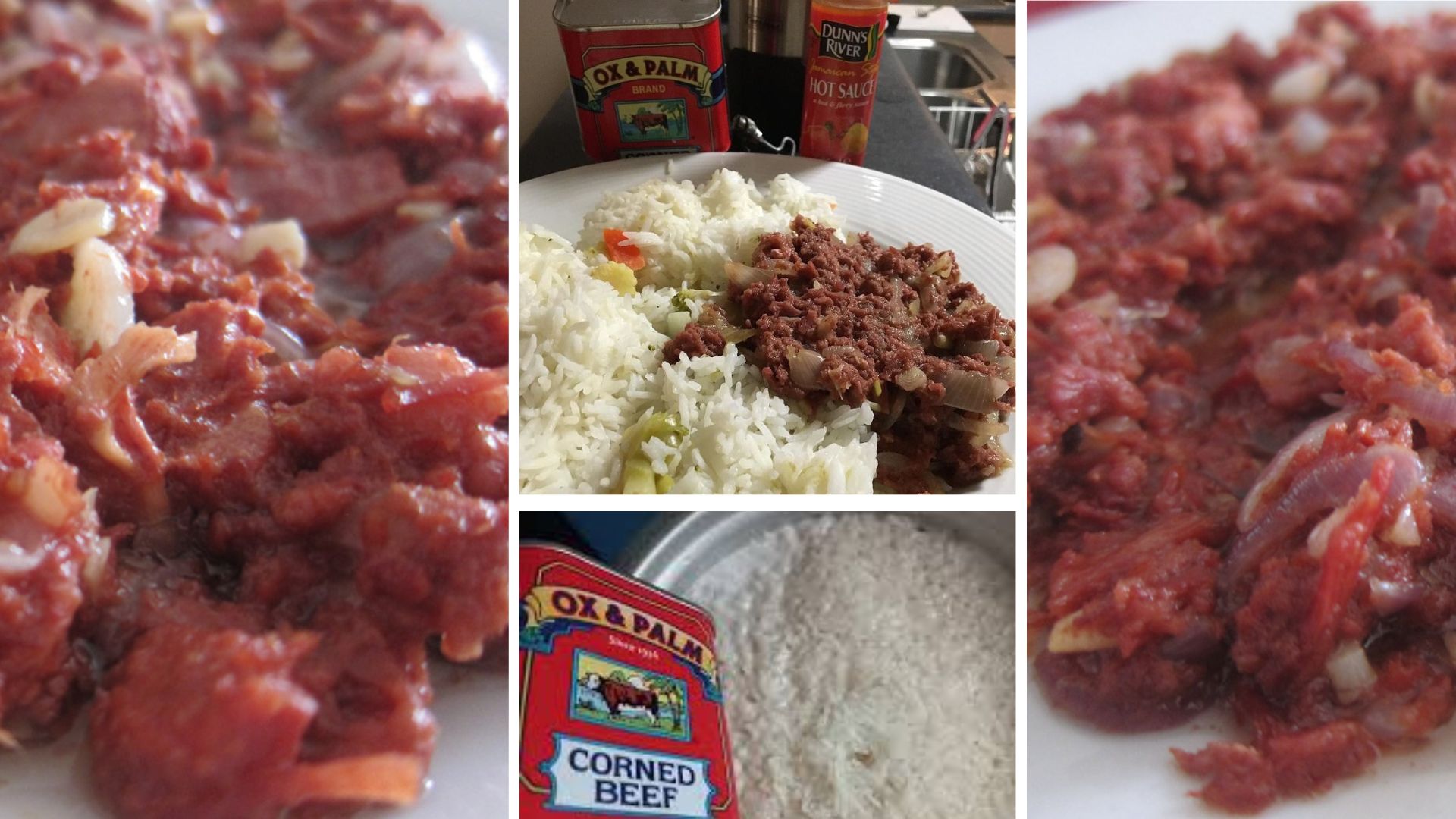
There are fancy foods in Papua New Guinea, and then there are survival foods. And sitting proudly at the top of that second list—above two-minute noodles, above tinned fish, above last-pay-week bread and butter—is rice and corned beef. Not just any corned beef. Ox & Palm. The red can. The luxury national emergency ration—not because it’s rare, but because it’s favoured. The comfort food that has seen us through school holidays, boarding school trauma, pay week droughts, funerals, elections, and malaria recovery days when even water tastes suspicious.
If urban PNG had a smell, it would be onions frying in oil at 7pm, just as the power flickers, the water cuts off, and everyone nods like this was always part of the plan.
This version—one variation, because everyone swears theirs is the original—is the kind you make barefoot, leaning on the kitchen bench, radio on low, thinking about life.
DO NOT leave out the onions!
You start with two large onions. Not small onions. Small onions are for people who follow recipes. Slice them thick. Heat the oil and fry those onions until they’re soft and slightly golden, the kind of soft that says, yes, tonight we eat well. Add salt. Add pepper. Add a teaspoon of MSG—what you peeps know as Vetsin—the stuff that makes kumu taste like you’re brushing up against heaven, and the same magic dust that makes you finish your beef stew from the Chinese kai bar even when you promised yourself you were full.
Then comes the moment of ceremony:
You open the red can.
Ox & Palm is not just meat. It’s memory. It’s the sound of a can opener scraping against metal. It’s your mother saying, “Don’t eat it yet, it’s not cooked.” It’s your uncle insisting it tastes better straight from the can anyway. It’s the thing you always had even when there was nothing else—but also the one you chose when there were options.
Drop the corned beef into the pan. Let it sizzle. Break it up with your spoon, but not too much—you want chunks. Respect the beef. Let it cook through properly, releasing that unmistakable smell that tells everyone in the house, food is coming.
Now for the two large boiled potatoes. Not mashed. Not diced neatly like a cooking show. You break them with your hands into irregular, chunky bits. This is important. Corned beef does not respect symmetry. The potatoes soak up flavour, hold structure, and make the dish feel like it loves you back.
Add them in. Stir gently.
A tiny bit of water—just enough to loosen things up. Then comes the optional-but-not-really-optional touch: a pinch of curry powder or turmeric. Not enough to turn it into curry. Just enough to give colour, warmth, and that subtle “what did you add?” mystery.
Cook it through. Taste. Adjust salt if needed. Then turn off the heat and let it sit for a moment, like all good things should.
Serve over hot rice. Generous rice. Rice that says you’ve survived another day.
Why Ox & Palm corned beef Became Comfort Food
Ox & Palm arrived in PNG through colonial supply chains, war logistics, and trade routes that valued shelf life over freshness. But over time, it became more than just something that lasted. It became preferred. When there were cheaper tins on the shelf, this was the one people reached for. When guests were coming, this was the can you opened.
It fed students, labourers, families, and whole households when gardens failed or money ran out—but it also marked small upgrades: a good day, a visit, a moment worth acknowledging.
Comfort food isn’t about nutrition charts. It’s about choice as much as necessity. About knowing that no matter how rough the day was, rice and corned beef would show up and still feel like a treat.
This dish is eaten when you’re broke, tired, sick, heartbroken, or just lazy. It’s cooked during blackouts, floods, and election counts. It doesn’t judge. It just feeds.
And everyone has their own version. Some add tomatoes. Some add soy sauce. Some fry it dry. Some drown it in oil and call it “proper”. Families argue over it the way others argue over politics or rugby teams.
But the red can unites us.
These days, though, you can’t ignore it: Ox & Palm has become incredibly expensive. You pick it up in the shop, check the price, put it back, walk one aisle, come back, and stare again—quietly recalculating whether tonight qualifies as a special occasion. The “luxury” part of the luxury national emergency ration has started doing overtime.
Follow Rolf and Richard while you’re at it

So, in the interest of national morale, this proposal should now be formally added to Rolf Kekedo’s things-to-do list, if he hasn’t done so yet—somewhere between nation-building and dinner. And it must, by all rights, be included by Richard Mark in the next Abus na Kumu menu, under a new category: Emergency Classics (Urban Edition).
We also make a respectful, hungry suggestion to the Marape–Rosso Government: consider subsidising the red can. Not fuel. Not vehicles. Not even electricity. Just Ox & Palm. For unity. For morale. For the emotional stability of urban kitchens at 7pm.
Because when the power flickers, the water cuts off, and life is doing what life does, Papua New Guineans shouldn’t also have to negotiate with the price of their comfort food.
Rice and Ox & Palm isn’t just food.
It’s cultural infrastructure.
Subsidise the red can.
Put it on the list.
The people have spoken.