
Kava doesn’t arrive in Papua New Guinea with ceremony.
It slips in quietly, like a stranger at the edge of a night market. No drum roll. No formal mat laid out. Just a plastic cup, a murky brown liquid, and someone saying, “Yu laik traim?”
That alone tells you something important.
In PNG, kava cannot be considered ancestral furniture everywhere. It hasn’t been nailed into the floorboards of daily life across the country the way it has in Vanuatu or Fiji. It is present, growing, curious—but still negotiating its place among buai stains on concrete, coffee shared at dawn, and SP beer cracked open at sunset.
And yet—this is the part many people don’t know—kava is not entirely foreign to Papua New Guinea.
Among the Bel people of Madang, kava has long held a ceremonial role. It is not a drink for everyone. It is not casual. It is prepared and consumed by elders during traditional ceremonies, marking moments of gravity rather than leisure. There is no chatter, no social drinking culture wrapped around it. The meaning sits with authority, age, and ritual.
But that boundary has shifted.
Today, what was once confined to ceremonial space has increasingly become a commodity. Kava is now planted, traded, and consumed well beyond its traditional cultural confines. It moves through markets and settlements, through urban demand and rural supply chains. The plant has stepped out of ritual and into commerce, becoming part of a wider, more mainstream economy that no longer asks permission from ceremony.
That shift matters. It tells us that PNG did not simply “discover” kava through modern migration. In some places, the plant was already known—just kept within boundaries that are now loosening.
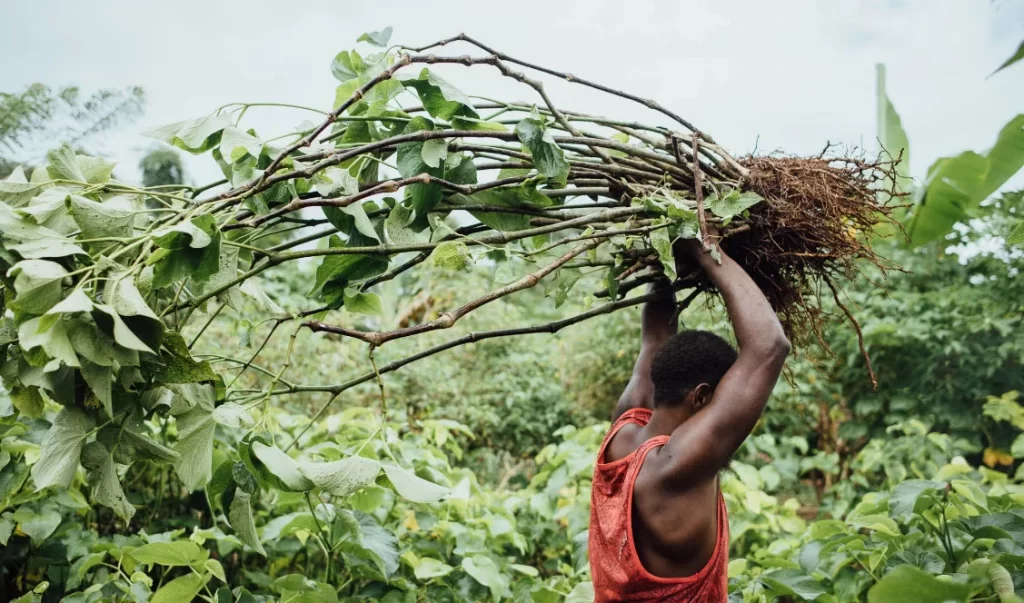
In Vanuatu, kava is the night itself. It is darkness, silence, and discipline. You sit. You drink. You do not talk much. The body listens inward. Kava there is older than the road, older than the state, older than the word “export.” It is a plant with authority. When ni-Vanuatu drink, they are not escaping the day; they are completing it.
https://www.turtlebaylodge.vu/kava/
In Fiji, kava—yaqona—is social architecture. It builds rooms where none existed. It turns strangers into cousins. There is laughter, talanoa, politics, church gossip, family business. Cups move clockwise. Stories move freely. You can measure time not in hours but in refills. In Fiji, kava doesn’t slow life down—it holds it together.
Papua New Guinea sits somewhere else entirely.
Here, kava is not a ritual inherited by everyone. It is an idea being tested beyond the places where it was once tightly held.
You see it in Madang, Lae, Port Moresby—often in spaces where cultures overlap. It is drunk by people who have lived elsewhere, worked elsewhere, married elsewhere. Fijians brought it with them, folded into suitcases and memory. PNG picked it up not through ceremony, but through proximity.
And that matters.
Because PNG already has its stimulant: buai. Loud, red, communal, unapologetic. Buai wakes you up. Kava asks you to sit down. Buai stains your mouth and the pavement. Kava clears your head and stills your hands. One is movement. The other is pause.
That contrast is why kava still feels unfamiliar to many Papua New Guineans.
Yet, the plant itself has roots deep in PNG soil. Madang’s kava—sometimes called koniak—is strong, distinct, and genetically unlike the noble varieties that dominate Vanuatu and Fiji’s export markets. Scientists say it doesn’t quite fit existing categories. It follows its own genetic path, separate from the classifications that shape most of the global trade. It’s its own thing, like PNG itself—diverse, complicated, resistant to neat labels.
Culturally, PNG has not yet decided what kava means outside those elder-led ceremonial spaces.
Is it medicine? A social drink? A cash crop? A quiet rebellion against alcohol? A foreign habit slowly becoming local? Right now, it is all of these and none of them at once.
There is no nationwide equivalent of the sevusevu. No single ceremony passed from province to province. When PNG drinks kava today, it borrows structure from elsewhere, then improvises. Plastic chairs replace woven mats. Phones buzz. Someone chews buai between cups. Someone else slips away early.
And that hybridity is not a weakness.
It is the story.
PNG does not absorb culture wholesale. It adapts, bends, remakes. Just as we took tinned fish and made it ceremonial, or rugby league and made it political, kava will not remain imported for long. It will be argued over. Redefined. Claimed.
One day, PNG kava won’t need comparison.
It will taste like red earth, humid nights, and unfinished conversations. It will carry the quiet weight of a country still deciding when to slow down—and when not to.
Until then, the cup is still being passed.