PNG has always sung first
Papua New Guineans have always been music people. Before studios, before Spotify, before the uncle with the cracked guitar learned only three chords but played them like his life depended on it, we already had song. We sang to mourn. We sang to celebrate. We sang to gossip. We sang because silence, in this country, has never lasted long.
Now AI wants to sing with us.
Scroll through Facebook or TikTok long enough and you’ll hear it — a familiar melody, a voice that sounds almost human, singing about love, land, God, heartbreak, buai, beer, politics, or all five at once. Only this time, no one recorded it in a backroom studio in Gordons or Lae. No band slept on the floor. No uncle tuned the guitar by ear.
A machine did it.
When the machine learns to sing Tok Pisin
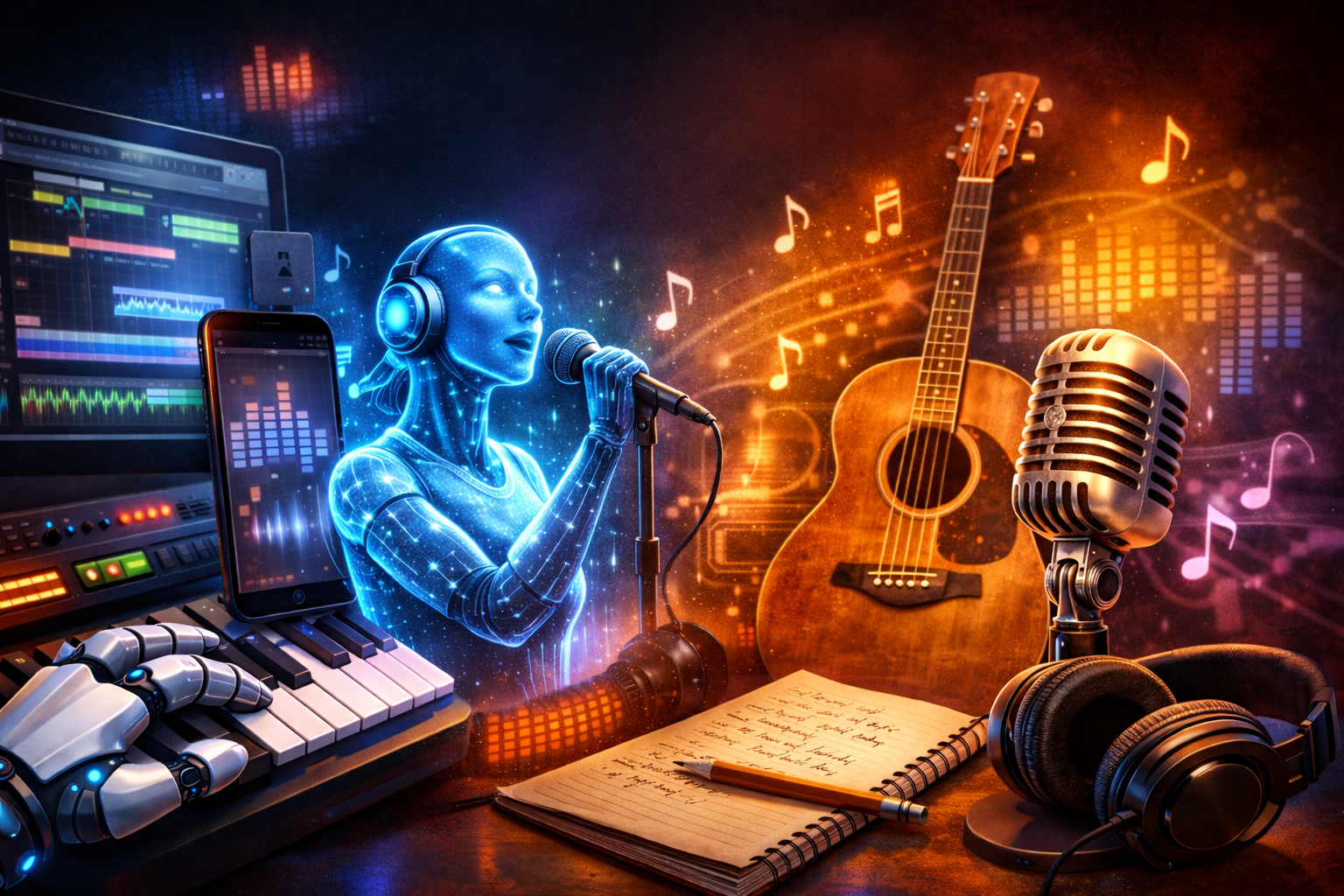
Apps like Suno, Udio, SOUNDRAW, and AIVA are quietly changing how music is made. Type a prompt. Choose a style. Paste some lyrics. Press generate. Two minutes later, you’ve got a song. Full vocals. Instruments. Chorus and bridge. Sometimes even better mixing than what comes out of a real studio with a real budget.
And yes — Papua New Guineans are using them.
Suno, especially, has slipped into PNG social media like buai juice into white sneakers. It’s easy. It’s fast. And most importantly, it lets you paste your own lyrics. That means Tok Pisin. That means gospel songs for Sunday. Love songs for someone who won’t text back. Political satire that would get you punched if you sang it at the market — but feels safer when a robot sings it instead.
Does it pronounce Tok Pisin perfectly? No. Sometimes it sounds like an Australian cousin who learned Tok Pisin from subtitles. But it’s close enough that people share it anyway. And that’s the point.
Easy songs, hard questions about value
Udio plays in the same space, but with more knobs and dials. It’s for people who want control — who want to tweak the sound, adjust the structure, pretend they’re producers now. It can handle Tok Pisin lyrics if you feed them in, but like Suno, it struggles with rhythm unless you simplify the lines. Tok Pisin lives in cadence. You feel it before you read it.
SOUNDRAW and AIVA are different beasts. They don’t sing. They make background music. Beats for videos. Soundtracks for documentaries. The kind of music that sits under a voiceover while someone explains land issues or church fundraising or why the road still isn’t finished.
They are useful tools. But culturally, they don’t talk back to us. They don’t carry humour, anger, or grief. They don’t sing stories.
And this is where the real question sits: what happens to value?
Music in PNG has always been more than sound. It’s reputation. It’s struggle. It’s someone you know. When a song goes viral now, who do you credit? The person who wrote the prompt? The app? The algorithm trained on thousands of songs by artists who will never see a toea from it?
What AI can help with — and what it can’t replace
There is excitement here, no doubt. AI lowers barriers. A kid in a settlement can make a song without studio money. A church youth group can write hymns without instruments. A storyteller can turn poetry into sound.
But there is also unease.
If music becomes too easy, too disposable, too generated, it risks becoming like chewed buai tossed on the roadside — everywhere, staining, quickly forgotten.
PNG music has always come from people — from breath, from fingers, from stories that hurt or heal. AI can help. It can assist. It can even inspire.
But it can’t replace the moment when someone sings and you recognise yourself in the song.
And maybe that’s where the line should stay.