
For years, many developing countries have viewed technology through the lens of access. The challenge was simply getting connected. But a growing battle unfolding across Africa suggests the next phase of digital development is not about who can provide internet access. It is about who controls the relationship with the customer.
The arrival of Amazon Leo, formerly known as Project Kuiper, in Kenya offers an important lesson for Papua New Guinea.
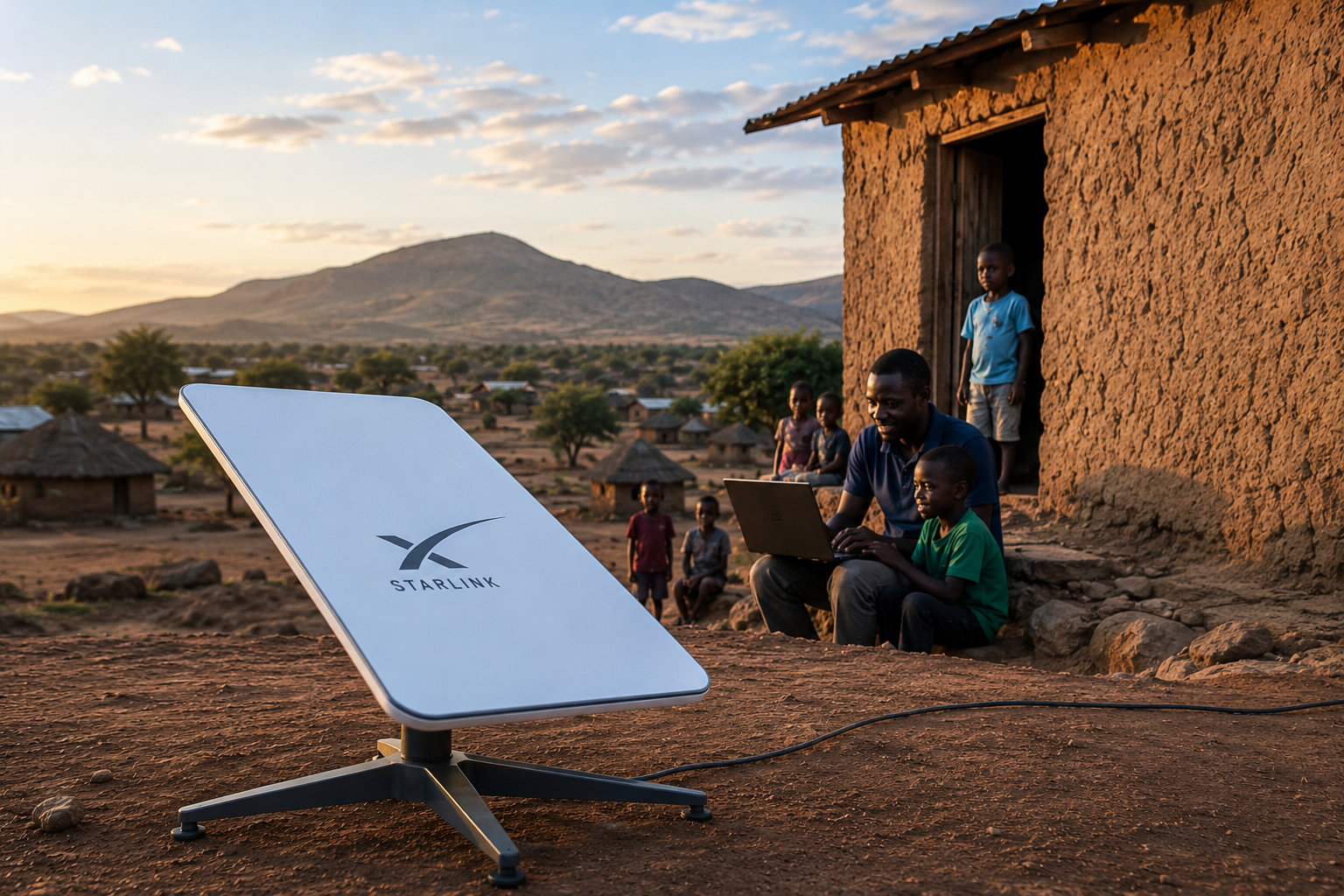
When Starlink entered Kenya, it disrupted the telecommunications market. It offered high-speed internet directly to consumers, bypassing traditional operators and reaching customers in places where fibre and mobile networks struggled to provide reliable service. Within a relatively short period, Starlink attracted thousands of subscribers and became one of the country’s largest internet service providers.
Many observers assumed that being first would guarantee long-term success.
But Amazon’s strategy appears to be very different.
Rather than competing solely for individual customers, Amazon has partnered with Vodafone, one of the world’s largest telecommunications companies. Through Vodafone’s African footprint and its links to companies such as Safaricom and Vodacom, Amazon gains access to existing towers, distribution channels, retail outlets, billing systems and millions of customers.
The lesson is simple.
Technology alone is not always the deciding factor.
Distribution matters.
In many industries, the companies that own customer relationships often hold greater long-term power than the companies that provide the underlying technology.
This is particularly relevant for Papua New Guinea.
The country’s digital transformation is accelerating. Mobile phone penetration has grown rapidly over the past decade. Starlink is now available across the country and is providing connectivity to businesses, schools, churches and communities that previously had few alternatives.
The immediate benefits are undeniable.
Remote health facilities can transmit data more easily. Schools can access educational resources. Small businesses can connect to customers and markets. Government agencies can communicate more effectively across difficult terrain.
However, the African experience suggests that connectivity itself may soon become a commodity.
The bigger question is who owns the platforms, services and customer relationships built on top of that connectivity.
If Papua New Guinea focuses only on internet access, it risks becoming a consumer of foreign technologies rather than a creator of local digital value.
The country’s telecommunications companies, banks, media organisations and technology startups should be paying close attention.
The future winners may not be the companies that own satellites. They may be the organisations that understand local markets, build trusted relationships and develop services that solve uniquely Papua New Guinean problems.
This extends beyond telecommunications.
Digital payments, e-commerce, online education, telemedicine, agricultural information systems and government services all depend on connectivity. Yet success in these sectors will depend less on bandwidth and more on understanding people.
Africa’s experience also highlights another important reality. Partnerships matter.
No single company can build every part of the digital ecosystem. The most successful organisations increasingly combine infrastructure, platforms and local knowledge. The Vodafone-Amazon partnership demonstrates how established networks can work with emerging technologies to create new opportunities.
Papua New Guinea’s telecommunications sector should view this not as a threat but as an opportunity. Partnerships between satellite providers, mobile operators, local technology firms and government agencies could help extend services to some of the country’s most isolated communities.
The arrival of satellite internet has changed the conversation.
The challenge is no longer simply connecting Papua New Guinea.
The challenge is ensuring Papua New Guineans capture the economic and social value that connectivity creates.
Africa’s satellite internet race shows that the future belongs not only to those who build the technology, but to those who build the relationships, services and ecosystems around it.
That may prove to be the most important lesson of all.