
When Starlink services went dark across Papua New Guinea in December 2025, many users experienced it as an abrupt reversal — a technology that had become “good enough to operate” in remote PNG was suddenly gone. But the shutdown did not begin in December. It was the endpoint of a long regulatory and legal conflict involving NICTA’s licensing process, the Ombudsman Commission’s intervention, and a judicial review that has yet to be resolved.
What Starlink changed — and who it was really serving
Low Earth Orbit (LEO) satellite internet changed the practical reality of connectivity in PNG. It offered low-latency, high-speed access in places where fibre, microwave links, or reliable mobile coverage were never going to reach soon — or at all. In PNG, Starlink was not primarily a mass-market household product. The strongest impact was on businesses, remote operations, vessels, worksites, clinics, schools, and regional teams — environments where connectivity affects safety, logistics, and basic service delivery.
This matters because it explains why the shutdown hurt: by 2025, Starlink was no longer a “trial curiosity.” It had become integrated into operations in places with no comparable alternative.
The process starts: NICTA’s LEO consultation and Starlink’s application
In August 2023, NICTA began a public consultation on licensing requirements for operators providing LEO satellite services. That consultation paper invited submissions and closed in September 2023, with further stakeholder input still being considered on at least one issue.
On 11 September 2023, Starlink Internet Services (PNG) Limited filed applications for various licences. Then, on 18 December 2023, Starlink was granted an “in-principle” licence — not a final licence — subject to finalising and agreeing on terms and conditions.
The January 2024 spark: a public announcement, then Ombudsman scrutiny
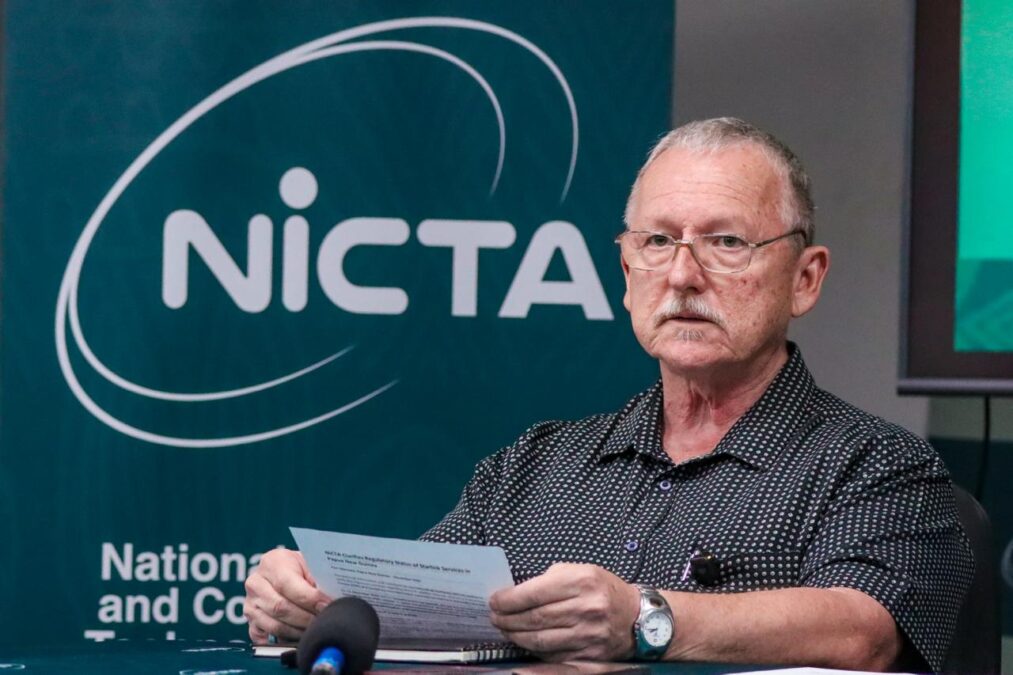
On 2 January 2024, then Minister for ICT Timothy Masiu announced the in-principle decision. That public announcement became a key trigger for the next phase.
Days later, the Ombudsman Commission began seeking information. Correspondence dated 10 January 2024 requested documents and information related to the Minister’s announcement. Further clarifications were sought later in January, and the Ombudsman also issued document requests directly to senior NICTA figures and the Board.
The Ombudsman’s concern appears to have focused on process: the basis for the public announcement, the integrity of the licensing decision-making, and whether consultation and due process requirements had been properly followed.
The March 2024 turning point: the Ombudsman Commission directive
The decisive moment arrived on 28 February 2024. NICTA’s CEO was served with a directive from the Ombudsman Commission under Section 27(4) of the Constitution.
The directive ordered NICTA to:
- not authorise the grant of a network operator licence to Starlink,
- ensure a licence is not granted unless “clearance” is issued by the Ombudsman Commission, and
- revoke the licence issued (in context, this goes to the in-principle approval) pending further and wider consultation.
NICTA’s position, echoed later in its public statement, is that this directive legally restrained it from completing the licensing process until the directive is withdrawn or overturned.
Attempts to resolve — then a court fight
After the directive, NICTA sought to have the restriction lifted. In April 2024, the CEO asked for the directive to be lifted and for approval to proceed, or at least to convene discussions. A meeting occurred in June 2024 between NICTA and Ombudsman Commission officers. NICTA’s Board Chair wrote again later in June requesting the directive be lifted — but it remained in place.
NICTA then moved to litigation. In August 2024 it sought leave for judicial review; leave was granted in September 2024; and the substantive application was filed later that month seeking orders such as certiorari and declarations (in short: a legal attempt to set aside or invalidate the Ombudsman directive). By September 2025, NICTA has said the matter had been heard and a decision was still pending.
December 2025: enforcement, then shutdown
With Starlink still unlicensed, NICTA says it had a statutory obligation under the National ICT Act 2009 to enforce compliance. On 11 December 2025, NICTA instructed SpaceX (Starlink’s parent company) to cease providing services in PNG, and on 16 December 2025 SpaceX disabled service.
This is where the grey area becomes central. Industry voices argue that for nearly two years there was no clear “yes” or “no” outcome — just delay, legal processes, and uncertainty — which allowed Starlink terminals to spread quietly through private importation and operational adoption. Then, when enforcement finally came, it created an immediate vacuum in connectivity for users who had built real-world systems around the service.
DataCo’s point: don’t turn this into “Starlink vs fibre”
The shutdown also revived a popular framing that Starlink makes fibre irrelevant. DataCo rejects that framing, arguing fibre remains the global “backbone” transmission technology — high capacity, low latency, secure — while LEO satellites are access solutions best suited to last-mile and hard-to-reach areas. DataCo also stresses that satellite systems rely on fibre backhaul as part of the global internet ecosystem and says PNG’s best path is a hybrid model: fibre backbone plus satellite access where needed. data co
What this means for PNG
In the short term, the shutdown hits hardest outside Port Moresby: remote businesses, operations, and mobile teams lose a service they relied on for safety, coordination, and continuity — sometimes with no substitute available.
In the long term, the bigger issue is regulatory readiness. Starlink is not the last LEO system. PNG will face the same challenge again with Amazon’s Project Kuiper and others. Without clear, time-bound pathways for new technologies — and clear coordination between institutions — PNG risks repeating the same cycle: delay → informal adoption → abrupt enforcement.
The Starlink shutdown is therefore not only a connectivity story. It is a governance and systems story: how PNG regulates fast-moving technology while balancing legality, consultation, competition, and the practical connectivity needs of its people.
 RobertKem says:
  solbetecuador says:
  betongame says:
  Dennisurity says:
  Williamsiz says: