
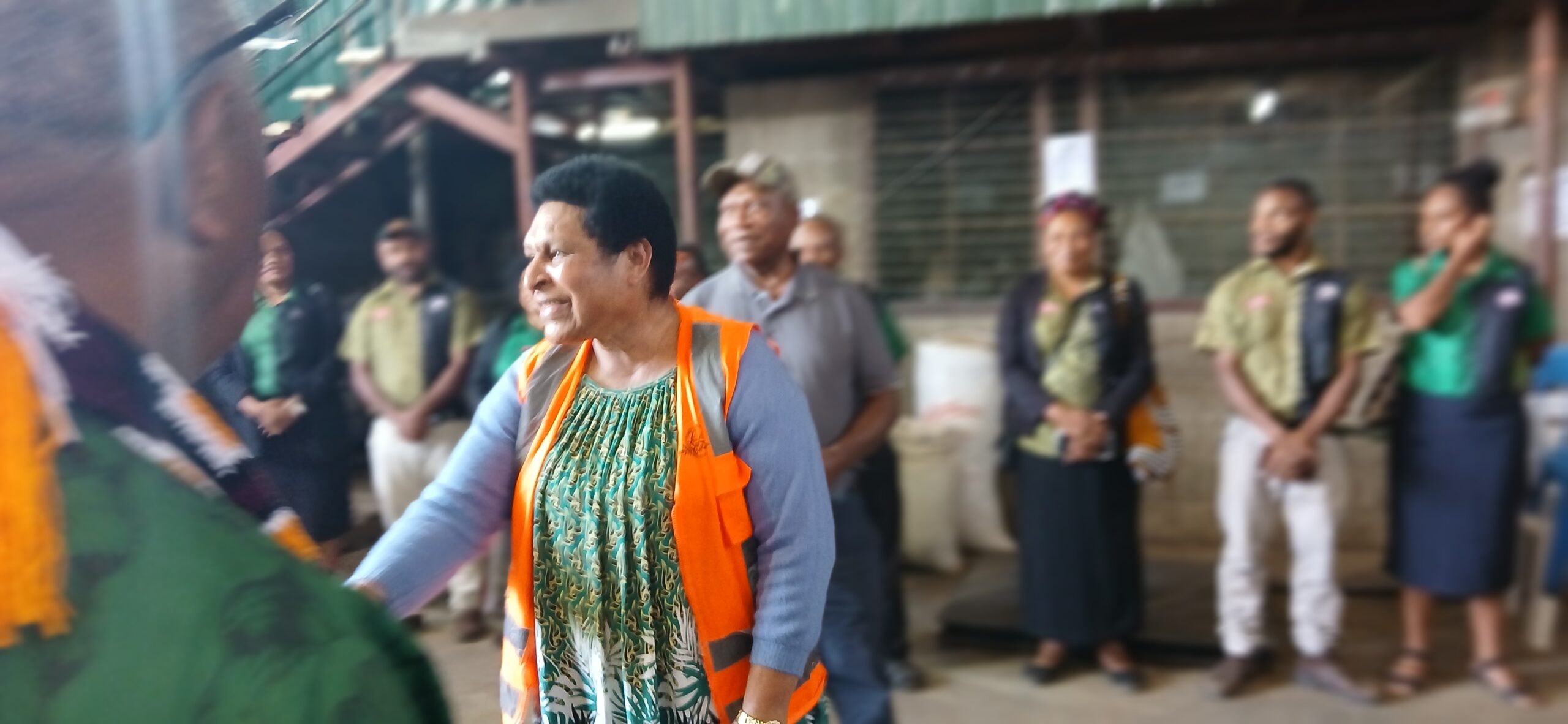
Just outside Goroka, a family-owned coffee processing business is demonstrating what targeted investment can achieve in Papua New Guinea’s export economy.
Las Malo Coffee, run by Ken and Maureen Dumudi in Eastern Highlands Province, has emerged over the past year as one of the stronger performers in the country’s coffee industry. In 2025, Papua New Guinea exported approximately K1.3 billion worth of coffee. About 2 per cent of that total — roughly K26 million — came from Las Malo Coffee alone.
The growth trajectory has been measurable. The company increased production from three containers per month to an average of eight containers per month. Each container generates between K400,000 and K500,000 in export value. Since 2018 through to 2025, the company has paid at least K18 million in taxes — a figure that reflects both expansion and sustained participation in the formal economy.
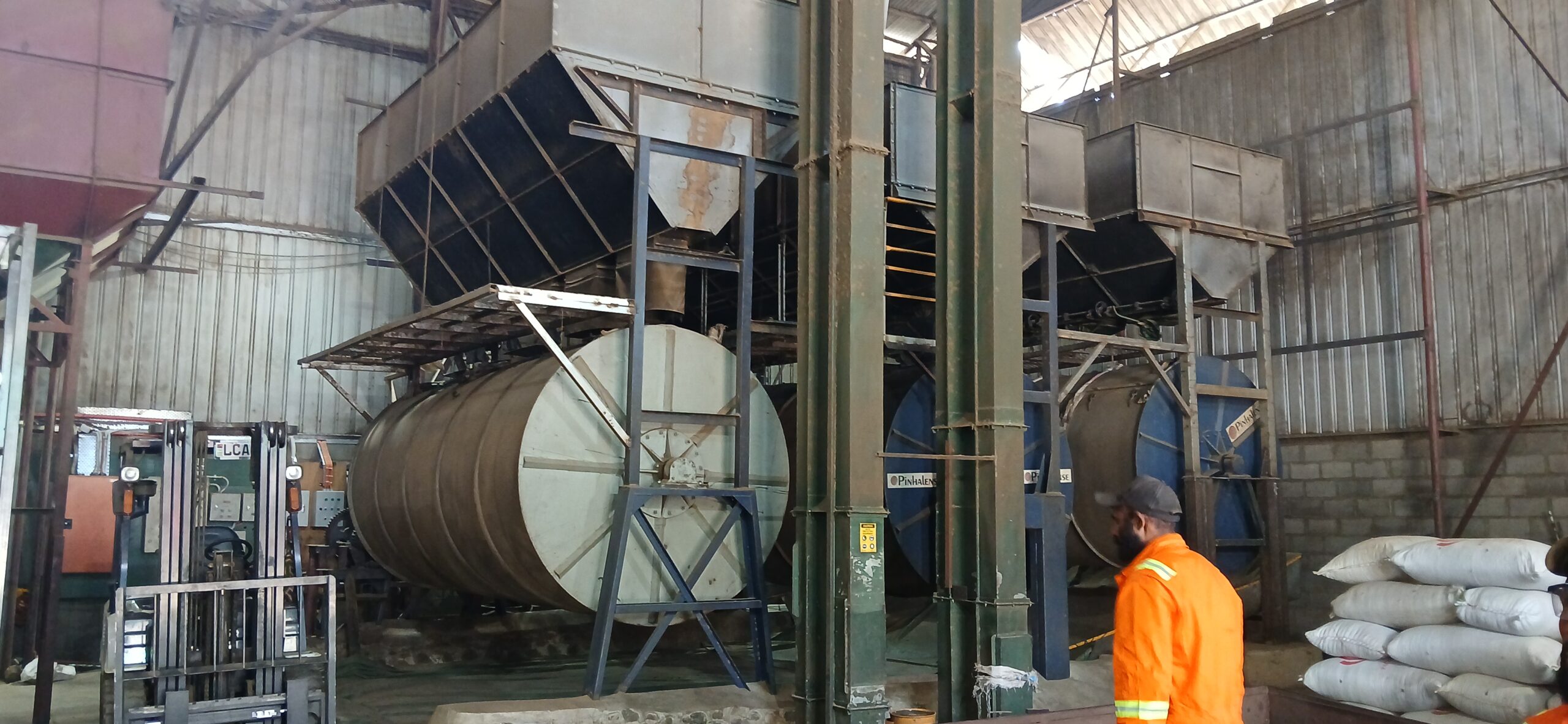
Ken Dumudi did not begin in agriculture. A former Works officer, he transitioned from construction into coffee processing. Together with Maureen Dumudi, the business has been built into a competitive export operation capable of scaling output within a relatively short period.
Maureen Dumudi says the company’s growth is tied directly to its farmer network.
“We buy coffee from all over the Eastern Highlands. We try to offer a good price. Our farmers come from as far away as Simbu and Southern Highlands. We have been able to increase production from three containers per month to eight.”
That supply base — stretching beyond provincial borders — has allowed the company to scale volumes while maintaining purchasing relationships across multiple coffee-growing areas.
A key factor behind the production increase has been support through the Productive Partnerships in Agriculture Project (PACD), implemented through the Coffee Industry Corporation (CIC) and funded by the World Bank Group. Las Malo received approximately K300,000 to purchase an electronic coffee sorting machine, which was installed in early 2025.
The impact was immediate. Improved sorting efficiency enhanced quality control and processing speed, allowing output to increase from three to at least eight containers per month. The upgrade strengthened the company’s competitiveness and positioned it to expand its share in the export market.
The broader effect extends beyond one business. Industry accounts indicate that interventions under the PACD program have contributed to a shift in market participation, with locally owned exporters increasing their presence and reducing foreign-owned market share by an estimated additional 20 per cent within segments of the coffee export sector.
This comes as Papua New Guinea launched the AgriConnect program, aimed at delivering a broader range of interventions designed to significantly boost the country’s agricultural production capacity. The program focuses on improving market access, strengthening value chains, supporting agribusiness expansion, and enhancing productivity across key commodities. For coffee processors like Las Malo, the alignment between targeted equipment support and wider production-focused reforms signals a more coordinated push to lift output at scale.
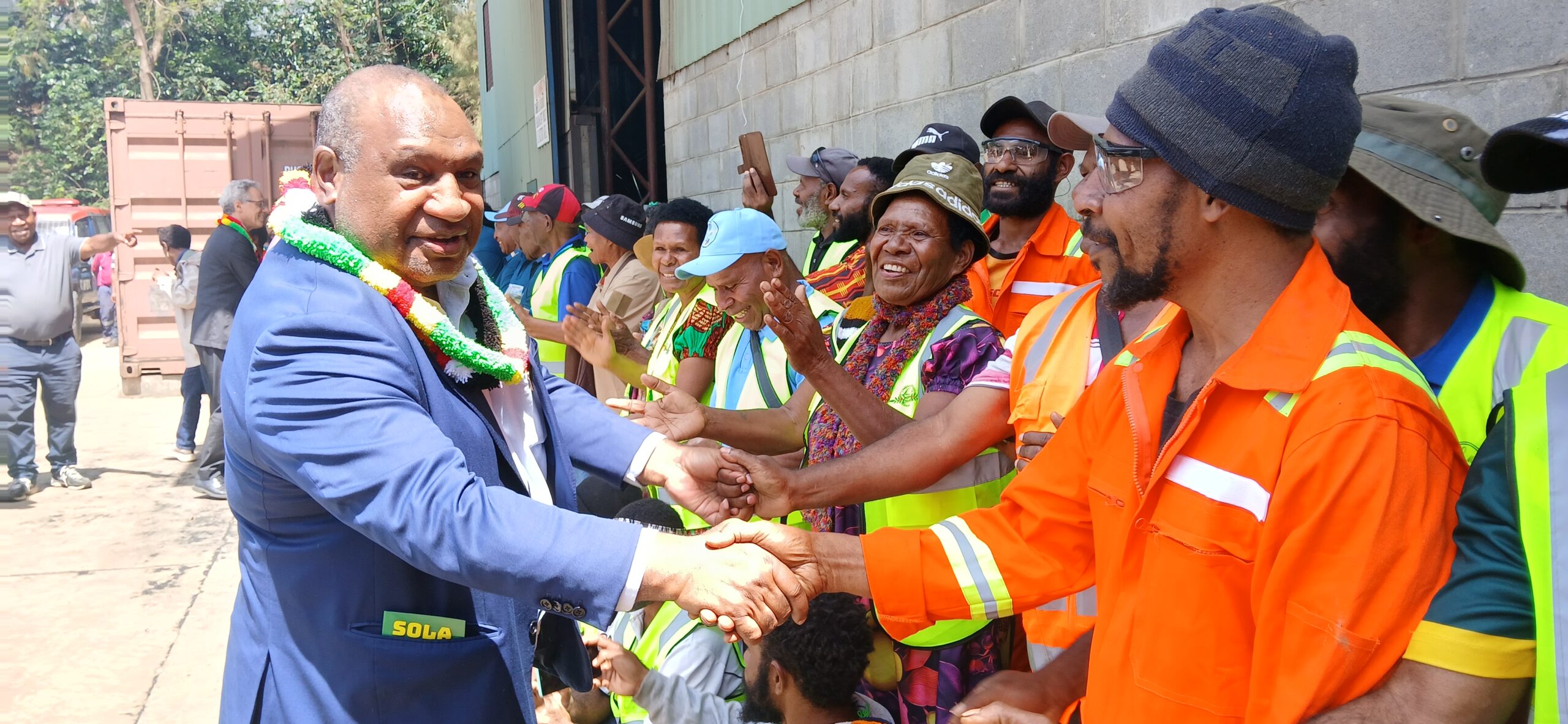
During the visit to the facility, the Prime Minister underscored the government’s emphasis on agriculture as a growth pathway.
“This is not the time for laziness. Agriculture is the easiest way to earn money in the economy using two of the greatest resources — yourself and your land.”
He visited alongside World Bank Vice President Carlos Jaramillo and International Finance Corporation (IFC) Regional Vice President for Asia and the Pacific Sarvesh Suri, observing firsthand how strategic funding interventions can strengthen domestic enterprises.
For the World Bank and IFC, the project aligns with a broader focus on productivity, value addition, and strengthening private sector capacity in developing economies. For Papua New Guinea, it provides a practical example of how targeted capital investment — when directed at specific productivity constraints — can unlock measurable gains.
In a sector that underpins rural livelihoods and foreign exchange earnings, efficiency improvements at the processing level have direct economic implications. Increased container volumes translate into higher export receipts, expanded tax contributions, and more stable purchasing capacity for upstream growers.
The significance of this case lies not only in the numbers — K1.3 billion in national coffee exports in 2025, K26 million attributed to Las Malo, K18 million in taxes paid since 2018, and container values between K400,000 and K500,000 — but in what it demonstrates. Family-owned processors, when equipped with the right tools and supported by structured financing programs, can compete effectively in Papua New Guinea’s export economy.





Awesome, I am elevated by the sheer determination and focus by the family business.
Very encouraging to see it from an ordinary people. Normal human doing extremely well in a time like this in our nation