
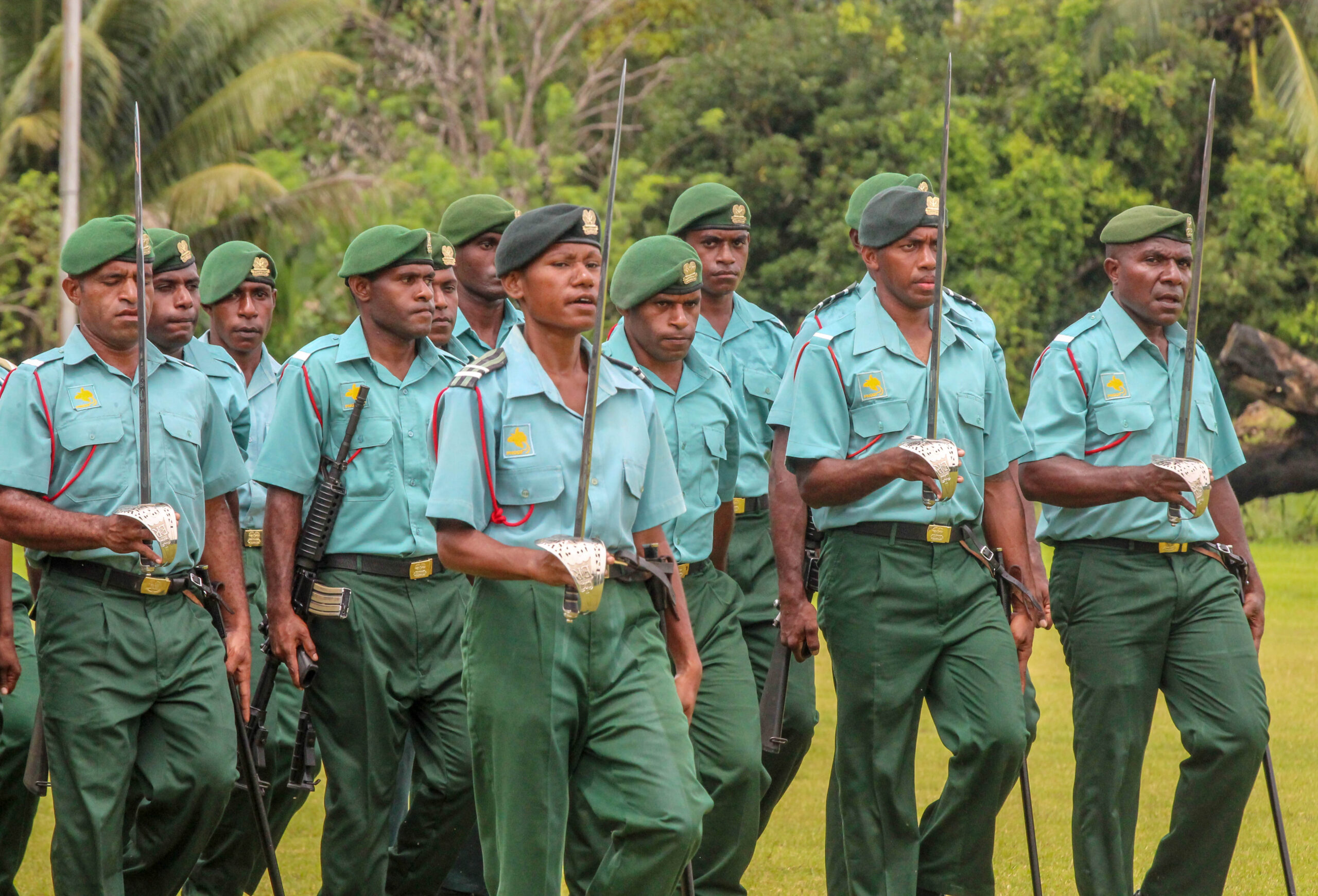
Recent controversy surrounding recruitment into the Papua New Guinea Defence Force (PNGDF) has exposed something larger than a dispute over who gets selected. It has raised uncomfortable questions about trust, professionalism and the relationship between politics and one of the country’s most important institutions.
A defence force is not an ordinary public agency. It is built on discipline, hierarchy and public confidence. Citizens must believe that those entrusted with national security are selected on merit, trained to a high standard and insulated from outside pressure. Once that belief begins to weaken, the damage can spread well beyond a single recruitment intake.
At the centre of the current debate are allegations of political influence in recruitment. Whether every claim is proven or not, the controversy itself matters. In institutions like the military, perception can be as important as process. If people believe political connections can outweigh qualifications, then faith in the system erodes.
That erosion has consequences.
Young Papua New Guineans who train hard, meet the standards and apply honestly may begin to think the process is not worth their effort. Families may question whether standards are being lowered. Existing personnel may feel loyalty to the institution is being tested by loyalty to outside interests. Over time, morale suffers.
The Papua New Guinea Defence Force must remain professionally distant from partisan politics. Governments set policy and provide oversight. That is their constitutional role. But operational matters such as recruitment, promotions and internal discipline must be governed by transparent rules, competent leadership and merit-based systems.
This is not simply about fairness. It is about national stability.
Papua New Guinea did not begin from nothing. At Independence, the country inherited a well-trained brigade-sized force with established traditions of discipline, field capability and professional command standards. It was one of the most capable state institutions available to the new nation.
That foundation was tested early. The first overseas deployment of the Papua New Guinea Defence Force to Vanuatu demonstrated that Papua New Guinean soldiers could operate beyond their borders with distinction, professionalism and regional credibility. It was an early sign that the force could contribute not only to domestic security, but also to stability in the wider Pacific.
That history matters because institutions inherit reputations as well as responsibilities. The standards built by earlier generations should be strengthened, not diluted.
Across the world, when armed forces become entangled in political patronage, institutions weaken. Factions emerge. Command structures become contested. Public trust declines. Even where no formal crisis occurs, the culture of professionalism slowly deteriorates.
Across the world, when armed forces become entangled in political patronage, institutions weaken. Factions emerge. Command structures become contested. Public trust declines. Even where no formal crisis occurs, the culture of professionalism slowly deteriorates.
The response from some soldiers during this controversy has also drawn attention. Public protests, emotional reactions and recorded videos circulated online may reflect genuine frustration, but they also suggest a deeper concern: a lack of confidence in existing internal systems to resolve disputes.
That should worry leadership.
When personnel feel they must take grievances to the public rather than through established chains of command, it signals that internal mechanisms are either not trusted, not effective, or not seen to be independent. In a disciplined force, complaints should be addressed through credible procedures, not through public confrontation.
This does not mean soldiers should remain silent in the face of wrongdoing. Accountability is essential. But accountability must be matched by orderly, respected processes that people believe will deliver fair outcomes.
The lesson here is broader than one controversy. Papua New Guinea needs strong institutions more than strong personalities. The defence force should never be viewed as a vehicle for political influence, regional favouritism or personal networks. It exists to serve the nation as a whole.
Restoring confidence will require more than statements. It may require an independent review of recruitment procedures, clearer public criteria, stronger internal complaint systems and visible separation between political offices and military administration.
Most of all, it requires leadership willing to defend the institution from interference — no matter where that interference comes from.
For a country facing complex security, border and law-and-order challenges, trust in the Papua New Guinea Defence Force is not optional. It is essential.