Three leaders of Papua New Guinea’s peak anti-corruption body are embroiled in a standoff that has brought into question the integrity of the organization.
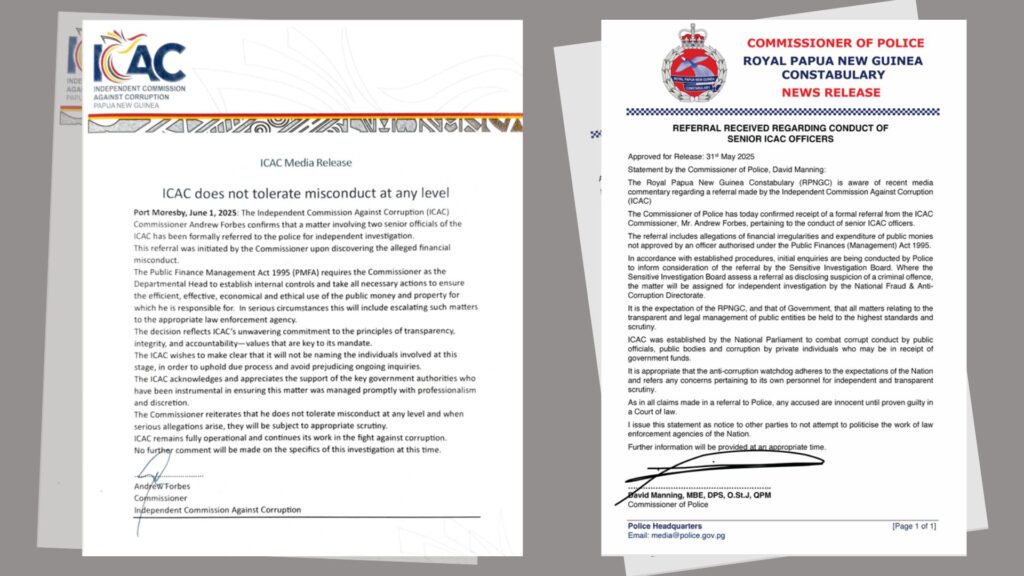
Last week, the Commissioner of Independent Commission Against Corruption (ICAC), Andrew Forbes, announced that “two senior officers” had been referred to the police for an independent investigation into alleged financial misconduct. The allegations include financial irregularities and the expenditure of public money without proper authorization under the Public Finances (Management) Act 1995.
The current situation unfolded further on May 31, when Police Commissioner, David Manning, confirmed that he had received a formal complaint from ICAC Commissioner Andrew Forbes against his two Deputy Commissioners, Daniel Peter Baulch and Graham Jonathan Gill.
Commissioner Manning said that initial inquiries are underway to inform the “Sensitive Investigation Board’s” consideration of the referral. The board itself is controversial. Having been set up as a half way point to decide if an investigation into a subject should proceed through the usual justice process.
Manning indicated if the board determines a criminal offense has occurred, the matter will be assigned to the National Fraud & Anti-Corruption Directorate for independent investigation.
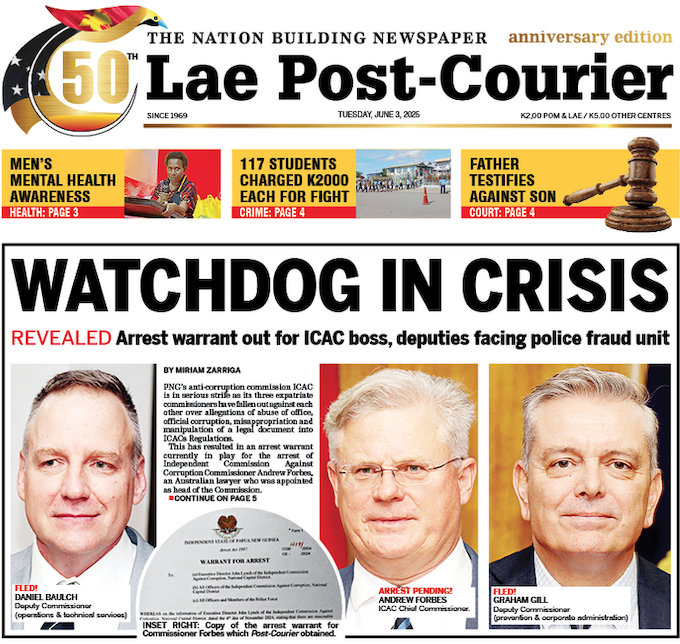
Andrew Forbes himself has since become the center of attention with a warrant reportedly out for his arrest as well.
A Post Courier article revealed a major fallout among its three expatriate commissioners, stemming from allegations of abuse of office, official corruption, misappropriation, and the manipulation of a legal document related to ICAC’s regulations.
The Post-Courier further detailed that the warrant for Commissioner Forbes’ arrest is a result of a “top-secret investigation initiated in August 2024, codenamed “Operation North”.
While the investigation concluded, the arrest warrant, issued by the PNG Principal Magistrate on November 8, 2024, had not been executed until now. The report said Papua New Guinea’s Prime Minister had been kept informed of the developments.
The accusations specifically link Forbes to the misappropriation of public funds, abuse of office, and corruption, with the warrant alleging that between May 1 and July 1, 2024, Forbes abused his authority by introducing changes to the draft Organic Law on the Independent Commission Against Corruption to restrict the statutory powers of his two Deputy Commissioners, Daniel Peter Baulch and Graham Jonathan Gill.
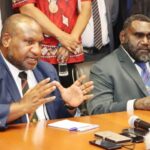
Prime Minister James Marape has issued a statement acknowledging the internal leadership tensions within ICAC and reaffirming his government’s commitment to the institution.
The establishment of ICAC in Papua New Guinea has been a long-standing national aspiration, dating back to 1984. The enabling legislation for ICAC was passed on November 20, 2020, bringing the body into legal existence.
Prime Minister Marape said it was a proud moment of his leadership having achieved in just 18 months after he took office in May 2019. The appointments process for ICAC officials was described as rigorous and internationally supervised, making the current internal disputes disheartening for many.
While the specific roles of the two senior officials referred to police are not publicly named by ICAC, the Prime Minister’s statement refers to “internal leadership tensions between the Commissioner and Assistant Commissioners”.
Prime Minister James Marape has reacted strongly to the situation, expressing disappointment over the allegations and differences between the three ICAC leaders. He affirmed his government’s “unwavering commitment” to ICAC, despite the internal leadership dispute.
These developments have significant implications for Papua New Guinea, particularly concerning its international commitments related to combating financial crime.
Papua New Guinea has been working to address deficiencies in its anti-money laundering and counter-terrorism financing (AML/CTF) framework, with the Financial Action Task Force (FATF) closely monitoring its progress. An effective and credible ICAC is crucial for demonstrating the country’s commitment to fighting corruption, a key component of a robust AML/CTF regime.
Furthermore, the International Monetary Fund (IMF) often includes governance and anti-corruption measures as part of its conditionalities for financial assistance and program support.
Any perception of instability or compromised integrity within ICAC could hinder Papua New Guinea’s efforts to meet these international requirements, potentially affecting its financial standing and access to crucial development funds.
The current situation lays bare the urgent need for swift and decisive action to restore confidence in ICAC and ensure it can effectively fulfill its mandate.