A senior member of a Papua New Guinean youth led organization says there are important lessons in locally led community engagement that donor partners need to corporate into their planning.
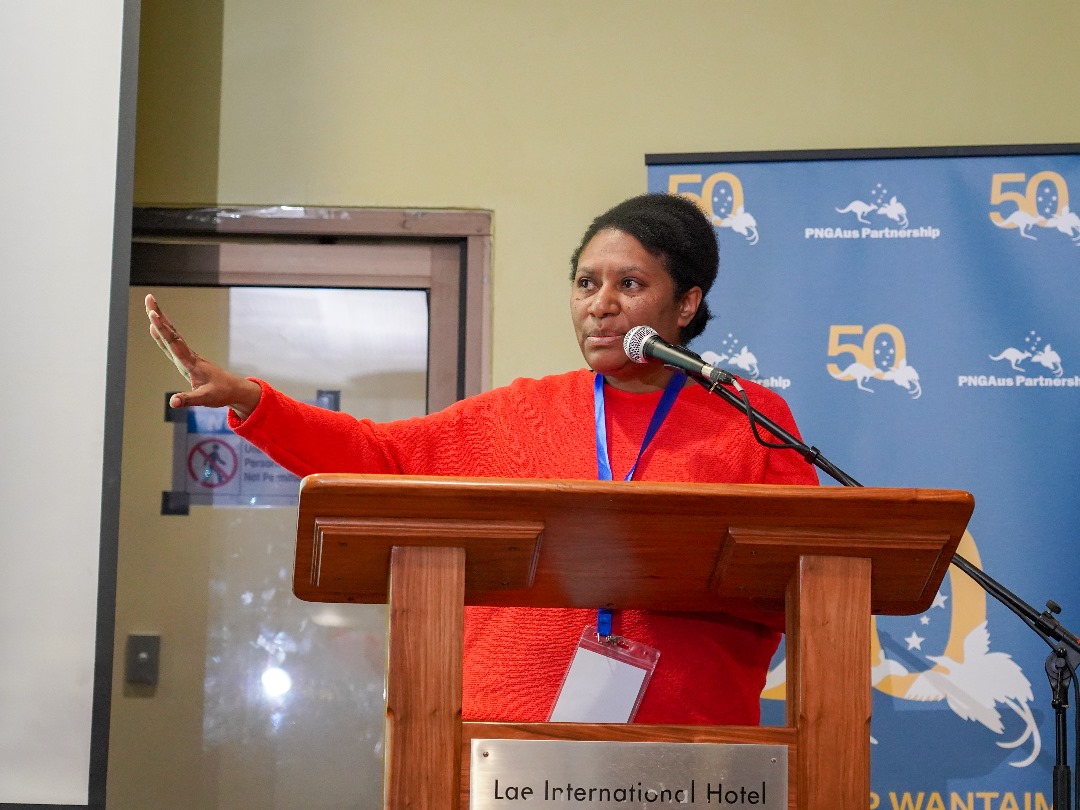
Barbara Thomas from The Voice Incorporated said building relationships and achieving shared objectives are crucial in Papua New Guinea.
The Dynamics of Collective Action
Thomas, from The Voice Inc. (TVI), recently shared insights on how to make local development efforts truly effective. Her talk highlighted the challenges and successful methods for getting groups to work together and achieve real change in PNG communities.
A key point Thomas made was the difficulty in setting and maintaining a common goal when various groups collaborate.
“Getting people to come around and work around a shared objective, it’s not easy work. Everyone has different interests and different data coming with different objectives,” she explained.
She stressed that balancing these different interests while moving towards a shared outcome is a significant challenge. Thomas also noted that while urgent situations like elections or crises can quickly kickstart action, keeping that effort going over the long term is the “real work”.
Cultural differences, though sometimes difficult, were also presented as opportunities for connection and collaboration. To address these hurdles, Thomas emphasized the importance of creating “purposeful spaces”.
These are planned meetings or forums where different groups can discuss their interests, collectively define their goals, and establish who is responsible for what. She cited examples like six-monthly issue group meetings and “ways of working” workshops, which are supported by the Building Community Engagement in PNG Program (BCEP). This consistent engagement within structured environments is vital for building the necessary “glue” to sustain collective action efforts.
Engaging Government for Impact
Another crucial learning Thomas shared was about effectively working with government bodies. She acknowledged that Civil Society Organizations (CSOs) might become disillusioned with government involvement but underscored its extreme importance.
Success depends on prioritizing work with both political figures and state institutions, as strong relationships are fundamental. Thomas highlighted that government bodies are more likely to engage with groups that provide credible data, maintain a consistent presence, and offer support relevant to policy. This strategic approach, built on evidence and steady commitment, gradually builds political will within the system. Furthermore, Thomas advised that proposed changes or reforms should be presented as solutions that directly help achieve government priorities.
When political actors see that reforms are instrumental in delivering on their agendas, they are more willing to get involved and approve them. This means CSOs need to move beyond merely expressing frustration and instead, proactively put forward tangible solutions.
Cultivating Local Wisdom for Future Strategies
The overall message from TVI is a commitment to documenting these learnings and fostering a collaborative environment where knowledge can be expanded through shared experiences with other organizations supporting collective action. In a significant call to action, Thomas also urged CSOs, NGOs, and FPOs to start producing “national content”—like practical guides and insights—from PNG’s unique community contexts, as this collective wisdom is vital for shaping future development strategies.
 bdbk33app says:
  casinoefbet says: