
The airwaves crackle with an infectious energy each morning, a vibrant tapestry of Pacific voices weaving stories that span continents and cultures.
It’s the sound of Nesia Daily, and its two dynamic hosts, Jacob McQuire and Michael Chow, whose diverse backgrounds and shared passion for storytelling have redefined cultural broadcasting at the Australian Broadcasting Corporation (ABC).
Jacob McQuire is a man who sometimes struggles to answer the simple question, “Who are you?”, and at his core it’s always: “Aboriginal and South Sea Islander.” His roots run deep into Central Queensland and the Dharumbal people. He also traces his line back to New Caledonia, Solomon Islands, and Vanuatu. Growing up in Rockhampton, an 800-kilometer drive north of Brisbane, Jacob was immersed in both Aboriginal and South Sea communities. His connection to the Pacific is profoundly personal; his middle name is a custom name from Lamtahekil village, Tanna Island, where his family hails from, and he journeyed back every four or five years to connect with his cousins and spend time in the village.
“It’s always been a part of my life,” Jacob reflects, “But, yeah, that’s me at my core. You know, me camping South beyond the Aboriginal Yeah”.
Tracing his ancestry back, Jacob reveals a rich tapestry woven through generations.
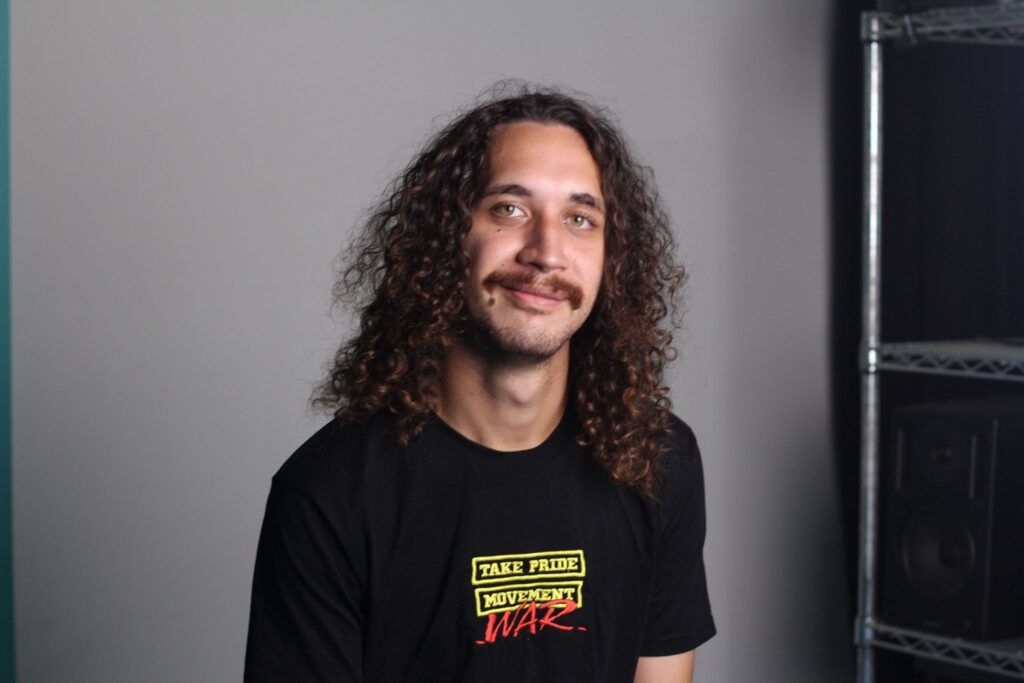
His grandparents’ grandparents were the ones who made the journey. On his grandmother’s side, her grandfather, Jimmy Youse, was from Tanna Island. Jimmy Youse daughter, Mary Youse, married George Mann, who was “half Aboriginal, half Kanaky from Caledonia”. Another thread leads to Tikopia in the Solomon Islands, where his grandmother’s grandparents originated. These difficult histories, the connections endure, strengthened by his work on Nesia Daily.
“Going through this job, it’s just been, you know, really wonderful learning about sort of different places throughout the Pacific and different places where your ancestors are from,” he shares.
For Jacob, broadcasting on Nesia Daily allows him to connect with people from his ancestral lands, a poignant experience for those ancestors who were never able to return home.
“I think a part of them is traveling with you and you have these conversations,” he explains.
Meanwhile, Michael Chow’s journey to the ABC airwaves is equally interesting.
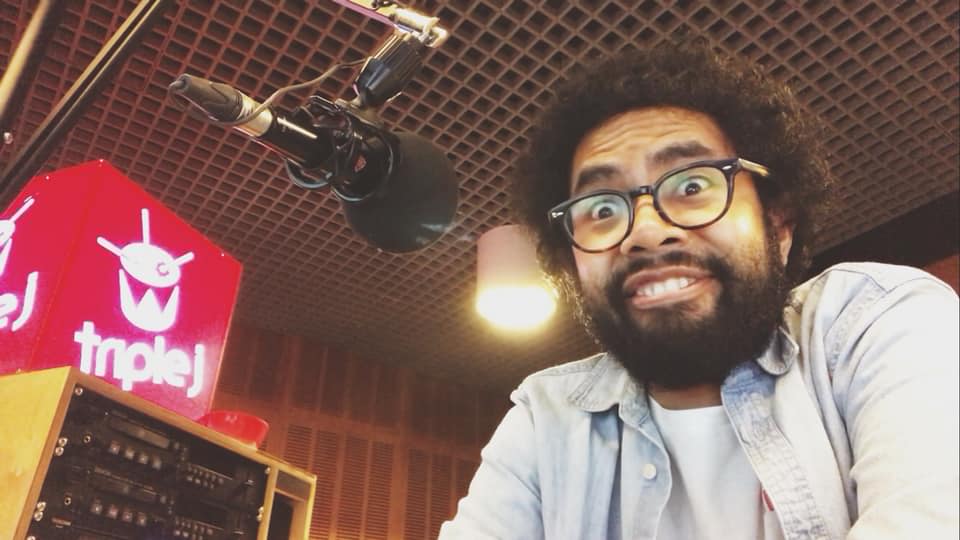
Born in Vunapope, Kokopo, in a small Catholic hospital on a hill, Michael’s heritage is a fascinating blend. His mother’s family is from Bipi Island, Manus Province, the “last inhabited island on the west side before you hit empty islands and empty ocean.” On his father’s side, he is Chinese, part of the “old Chinese family” that arrived in PNG. His father was a “New Guinea Born Chinese.” Michael vividly recounts his upbringing in PNG, primarily in Lae, and briefly in Rabaul before his parents left prior to the 1994 volcano eruption. At 15, a significant shift occurred when his grandfather, Sir Henry Chow, decided to send him to Australia. This move was a “huge life change, huge culture shock” for young Michael, who found Sydney “way too cold”.
After finishing high school in Australia, Michael “fell in love with music” and slowly transitioned into radio, initially doing content creation in video and music. He began working casually at the ABC, taking late-night and overnight shifts. A profound yearning for home, ignited by a YouTube video of the legendary Sean Dorney that made him cry, spurred him to reach out to the ABC.
“I know, the ABC does a lot of stuff with the Pacific,” he recalled asking, “Like, I would like to do things that take me back home, you know, even if I have to carry coffee around for people and not get paid, I will do it”.
This earnest plea led to a call from a proud Samoan woman, Inga Stunzner, who eventually brought him to the program. Michael humorously credits Jacob, who was on the judging panel a week before him, with his career at the ABC.
The blend of these diverse experiences is at the heart of Nesia Daily’s success. Michael believes “perspective is kind of the big thing for me”. Having witnessed “two different sides of PNG” through his mother’s Manus family and his father’s side, whose brothers and father “pretty much ran a lot of things,” provided him with a unique lens. This, combined with the experience of living away from home in Australia, profoundly shaped his approach.
“Being multicultural background kind of really helps,” Michael explains, “especially when we have to talk to people of other cultures and, like, even pick up other languages, you know, to speak with, you know, yeah, try to relate things that might be foreign to one island to another island, and things like that.”.
For Jacob, bringing his background to Nesia Daily has been a “crazy” and “wonderful” experience. He had long desired to work in the Pacific space after years in indigenous media. The realization that his cousins could now tune in was a “hectic” moment for him. He notes the challenge of being South Sea Islander, with ancestral ties to numerous islands, having only visited Tannah. Nesia Daily allows him to connect with places and people he hasn’t physically experienced, giving voice to those whose histories were fragmented by the blackbirding period.
“Getting to jump on the radio and talk to people from that place, it makes you feel connected,” Jacob says.
Adding that he feels a part of his ancestors, “who never got to see that place again,” are “traveling with you and you have these conversations”.
The future of Nesia Daily is a topic of both excitement and reflection for the hosts.
Michael fondly recalls his grandfather in Manus listening to Radio Australia on shortwave radio, the same “radio sting” for the news broadcasts still playing today. Now, he, along with Jacob, is part of a “new wave” of Pacific Island presenters broadcasting back home into the Pacific, a significant shift from when “it was just, like, you know, just Australians or white man, they were the ones broadcasting”. Michael hopes this signifies a truly open door for more Pacific people in broadcasting. He vividly describes an encounter with a young work experience student, a “half Chinese, half Popondetta kid,” who reminded him of himself.
He told her, “The day you want my job. You tell me and you can have it. Because I want morepeople from home to come who are able to come through and actually do this thing that we’re doing”.
He likens their role to being given a car and keys: “it’s our turn to take this for a spin, but at the end of the day, we’re going to hand the keys on to the next person”.
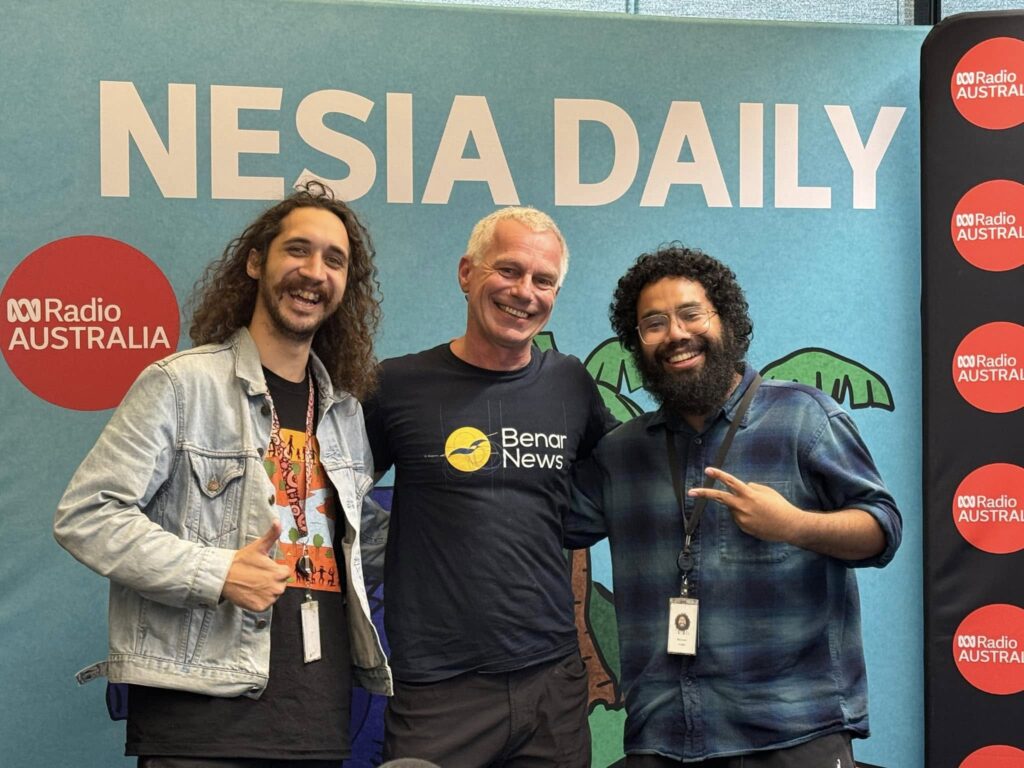
Jacob shares the often-humorous reactions he receives when people finally meet him after listening to him on the radio.
“Firstly, is you look like that crazy thing,” he jokes.
Admitting people are often surprised by his physical appearance given his Solomon Islander, New Caledonian, and Aboriginal heritage. He recounts a “hectic” experience in Port Vila, Vanuatu, where his driver recognized him from the ABC. Reflecting on the show’s beginnings, Jacob recalls the initial uncertainty of naming the program.
“Thinking that that’s turned into what needs your daily has become in just two years is crazy to think about that,” he marvels.
Expressing deep gratitude for listeners who allow them “into your lives for a couple of hours each day”.
They both acknowledge the ABC’s reputation as a serious journalistic institution. However, Nesia Daily injects a welcome dose of “popularity” and relatability.
“The fact that we get to be ourselves is kind of nice,” Jacob says.
“The fact that we get licensed to, you know, even make fun of the ABC every now and then is nice”.
They find immense satisfaction in spotlighting young people doing “amazing things” across the Pacific, regardless of their status. Michael highlights a memorable example: a show featuring both a 16-year-old directing a Hamlet adaptation in PNG and the President of Palau in the same hour.
“You can be young just beginning school and you can be the President of Palau, and there’s still space for you, on the show,” he emphasizes.
Looking ahead, the question of passing on the baton sparks playful banter. Jacob playfully asserts his youth over Michael’s.
“Michael’s much older than me, all right, so I’ve got a lot more juice in the tank,” he quips.
Adding that doing the show without Michael would be “strange”. Michael acknowledges the challenges of early mornings but expresses a desire to continue in media, particularly in a role where he can “find talent and nurture them” within the Pacifica community. Jacob dreams of a show or project that serves as a “connective tissue” between his Aboriginal heritage and the diverse indigenous cultures of the Pacific. He also expresses a desire to travel back to Vanuatu and live there for a year or two. While neither is ready to retire, they are keenly aware of the legacy they are building.
“It’s just like, it’s kind of special that this doesn’t belong to us, but for the first time we, you know, people like us were allowed to drive the car and hopefully pass it up to some more people,” Michael concludes.
The journey of Nesia Daily is far from over, but the road ahead promises to be as vibrant and diverse as the voices that fill its airwaves.