

Tuvalu, a tiny dot in the vast South Pacific, faces a unique challenge. With a population of just under 10,000 spread across a mere 26 square kilometres, its geographic isolation and modest size naturally limit traditional avenues for growth. Yet, beneath its waves lies an enormous asset: an Exclusive Economic Zone (EEZ) stretching nearly a million square kilometres, teeming with marine resources. This could be the cornerstone of its economic future.
For years, Tuvalu’s traditional development partners and allies – like Taiwan, Australia, and New Zealand – have offered support. The recent and ground-breaking Australia-Tuvalu Falepili Union Treaty is a testament to the kind of partnership Tuvalu desperately needs. But a crucial question lingers: are these efforts truly enough to unleash the island nation’s full potential, particularly in vital industries like fisheries?
Under component four, “Uplifting Our Partnership,” the Falepili Union Treaty lists telecommunications, education, fiscal support, connectivity, and health as key sectors. Noticeably absent? Tuvalu’s biggest revenue generator and most significant asset: its ocean.
The Investment Puzzle
Foreign investment in Tuvalu remains a significant hurdle. A recent review of the Tuvalu National Investment Policy Framework (TNIPF) laid bare both the opportunities and the ongoing obstacles shaping the country’s economic future.
Tuvalu’s small landmass and population naturally raise eyebrows among potential foreign investors. The nation’s economy leans heavily on external support, from direct grants by traditional partners and major financial institutions like the World Bank and the Asian Development Bank, to revenue from the Tuvalu Trust Fund.

Traditional industries, like agriculture and tourism, face inherent limitations. Small local businesses trading in coconut and seashell products are severely restricted. These are time-consuming, manual, and labour-intensive, particularly for women. Tourism, meanwhile, is negligible, often stymied by external factors like the high airfares charged by Fiji Airways, compounding Tuvalu’s isolation. This leaves the ocean as Tuvalu’s most promising asset, yet foreign investment in harnessing this resource has been remarkably slow to materialise.
Beyond Licensing Fees
The vast EEZ offers immense untapped potential far beyond mere licensing fees. Imagine a fisheries processing centre in Tuvalu, strategically positioned to supply markets across Asia, the European Union, and beyond. Such a facility could be a game-changer.
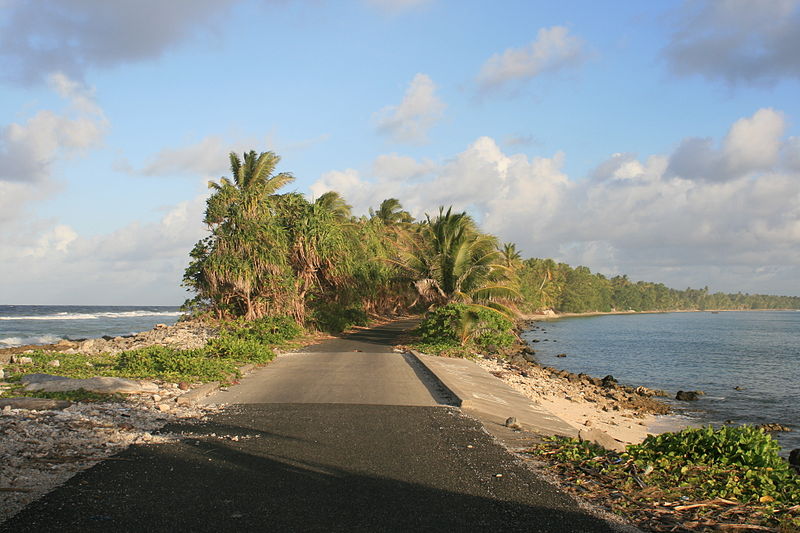
However, the risks associated with Tuvalu’s small size, remoteness, and acute vulnerability to climate change are deterring many investors. The persistent narrative that “Tuvalu is sinking” – driven by rising sea levels and global warming – further complicates efforts to attract capital. While this threat is very real, with the country’s average elevation just barely three metres above sea level, it often overshadows the immediate opportunities that exist, particularly in the marine sector.
Development partners have certainly supported climate resilience projects, such as the Tuvalu Coastal Adaptation Project, but these efforts often prioritise survival over prosperity. A strategic shift towards investment in productive industries, like fisheries processing, could actively counter this perception. It could prove that Tuvalu is not just a victim of the climate crisis, but a viable player in the global economy.
Adding to the complexity, migration trends are shrinking Tuvalu’s population as its citizens seek opportunities abroad, often through labour mobility schemes in Australia and New Zealand. This “brain drain” depletes the skilled workforce needed to drive new industries, while the loss of residents shrinks the domestic market, further discouraging investment.
The Untapped Goldmine: Fisheries
While never explicitly listed among the current Tuvalu Government’s 21 priorities, the fisheries sector is, without doubt, a vital revenue source and the nation’s biggest asset. Fishing licences, primarily for tuna, generate significant income through agreements with nations like Taiwan, Japan, South Korea, and the United States. In 2024, the Tuvalu government projected earnings of A$33.7 million from fishing licences, a large proportion of its total projected domestic revenue of A$47.1 million – though this figure does fluctuate with global market conditions.
Crucially, the country lacks the infrastructure to process and export its own catch on a large scale. Almost all fishing activity in Tuvalu’s waters is conducted by foreign vessels, which extract the fish and process it elsewhere. This leaves Tuvalu with licensing fees but little control over the value chain.
A Transformative Opportunity
Building a major fisheries processing centre could fundamentally transform this dynamic. Such a facility would enable Tuvalu to process its abundant tuna – species like skipjack, yellowfin, and bigeye – and export value-added products to international markets, creating jobs, boosting revenue, and fostering genuine economic independence.
The TNIPF itself discusses the possibility of developing such a facility in Tuvalu. Allies like Taiwan, with their advanced fishing industry and expertise, are particularly well-positioned to lead this effort. Investments in cold storage, canning facilities, and training programs for local workers could turn Tuvalu into a regional hub for fisheries products.
Yet, the contributions of Tuvalu’s traditional development partners have largely focused on smaller-scale aid rather than transformative industrial projects. This leaves a significant gap that undermines the potential of these partnerships. A neighbouring country, the Solomon Islands, already boasts a viable fish canning industry and exports tuna loins to the European Union market. This model, requiring less investment than a full canning facility, could serve as a valuable blueprint for Tuvalu.
The Hard Questions
However, building such infrastructure in Tuvalu raises challenging questions: Is it truly feasible to construct this kind of facility in such a small country? Consider the costs, the very real climate change risks, limited land area, labour supply constraints, low domestic market demand, and the stiff competition from established facilities like SolTuna in the Solomon Islands.

So far, very few comprehensive feasibility studies have been conducted on setting up such a facility in Tuvalu. The only significant published study, completed by The Pacific Community (SPC) in the late 2000s, concluded that infrastructure deficits, high freight costs, and limited markets were major barriers to developing a cannery. However, that same study suggested that focusing on value-added fish products, such as tuna jerky, could be realistic for Tuvalu, given its similarity to traditional products like Tuvaluan salted fish (ika masima). For example, the global market for fish jerky snacks is forecast to reach US$1.3 billion by 2033.
It might be time for Tuvalu to start having more direct, and sometimes uncomfortable, conversations with its partners.
The ocean is Tuvalu’s lifeline, and its allies possess the resources and expertise to transform this asset into a thriving export industry. Until bolder moves are made, the question remains: are Tuvalu’s partners truly doing enough? Given Tuvalu’s immense potential and the pressing challenges it faces, the answer right now, sadly, appears to be no.
This article appeared first on Devpolicy Blog (devpolicy.org), from the Development Policy Centre at The Australian National University.
 mycly88 says:
  makBioma says: