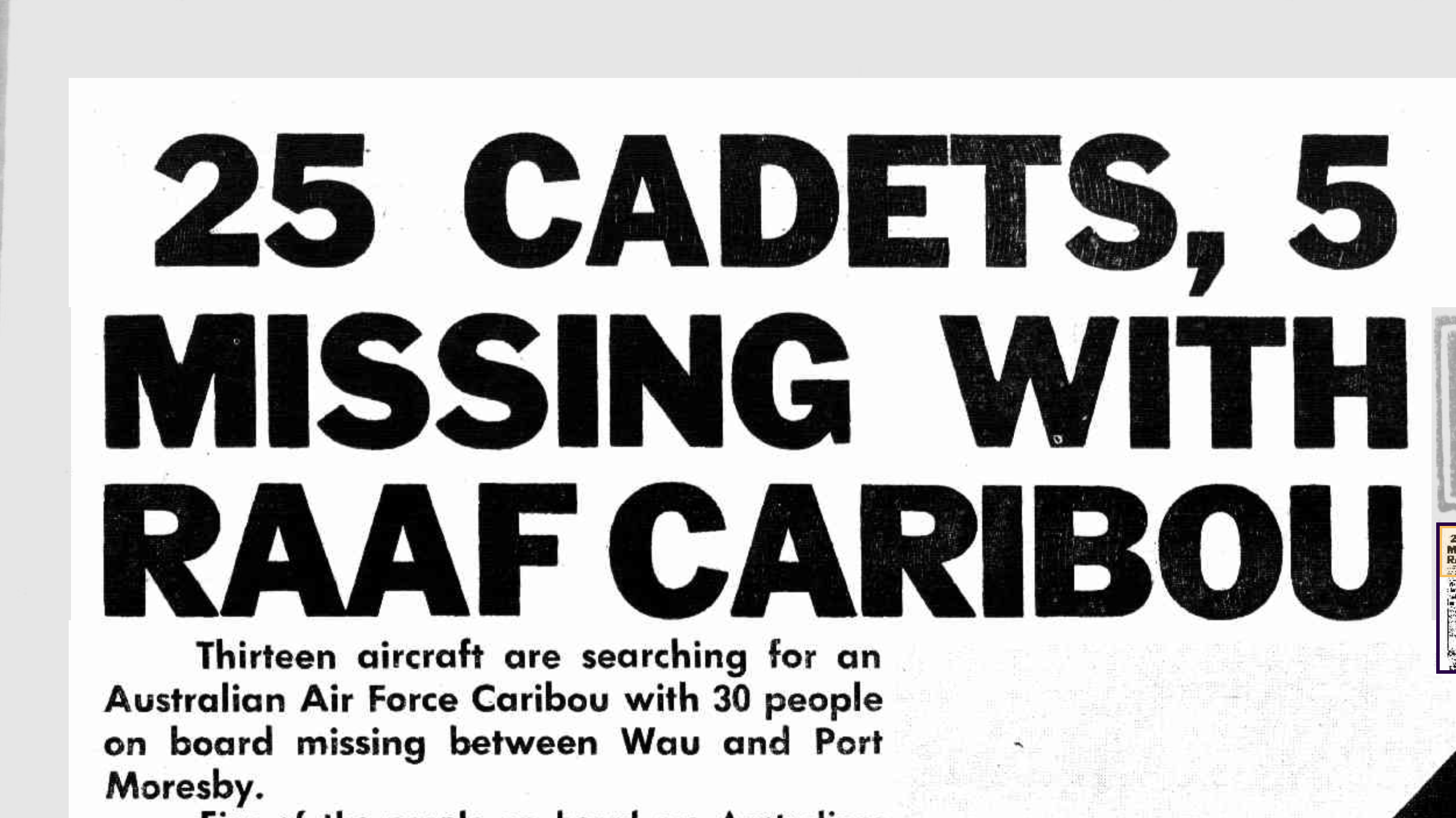
On 28 August 1972, a Royal Australian Air Force DHC-4 Caribou aircraft crashed in the mountains of Papua New Guinea while flying from Lae to Port Moresby. The aircraft was carrying Australian military personnel and Papua New Guinean school cadets returning from a training camp near Lae. What began as a routine transport flight became one of the most serious peacetime aviation tragedies in the country’s pre-independence years.
The Caribou departed Lae at 2.01pm with an estimated flight time of just over an hour. On board were 30 people: three RAAF crew members, one Australian Army officer, and 25 PNG school cadets, most of them students from De La Salle College in Port Moresby, with one from Popondetta High School. Weather conditions were already marginal, with low cloud stretching inland over the mountains. The pilot indicated he would radio when passing Wau and again near Mount Yule. Those calls were never received.
A ROUTINE FLIGHT THROUGH DANGEROUS TERRAIN
Flying across Papua New Guinea’s central ranges has always carried risk. Although the Caribou was designed for rugged conditions, cloud, terrain, and rapidly changing weather left little margin for error. As the aircraft approached the Kudjuru Gap, south of Wau, visibility deteriorated sharply. Evidence later suggested the pilot attempted to turn back before the aircraft struck trees on a forested ridge and crashed into steep jungle terrain.
IMPACT IN THE KUDJURU GAP
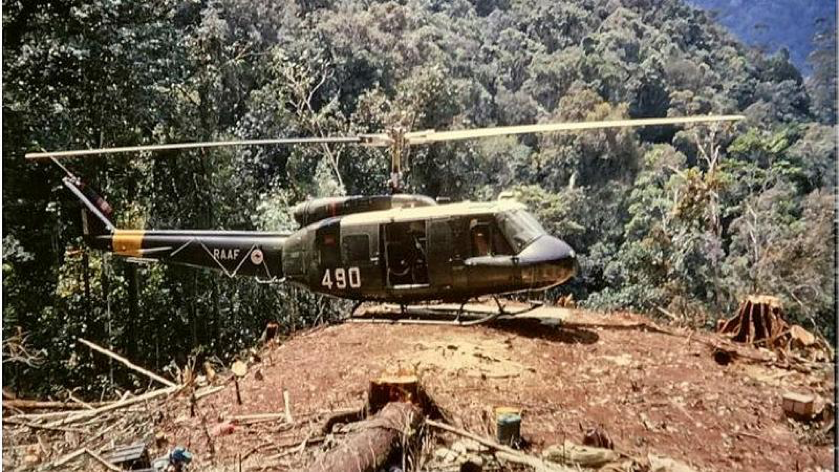
The crash site lay in remote, heavily timbered country, difficult to reach even by air. An emergency locator beacon on board the aircraft was never detected, as it required manual activation. When the Caribou failed to arrive in Port Moresby, military authorities escalated the situation from alert to full emergency, and a coordinated search involving multiple aircraft was launched over the Wau–Bulolo region.
SURVIVAL, RESCUE, AND LOSS
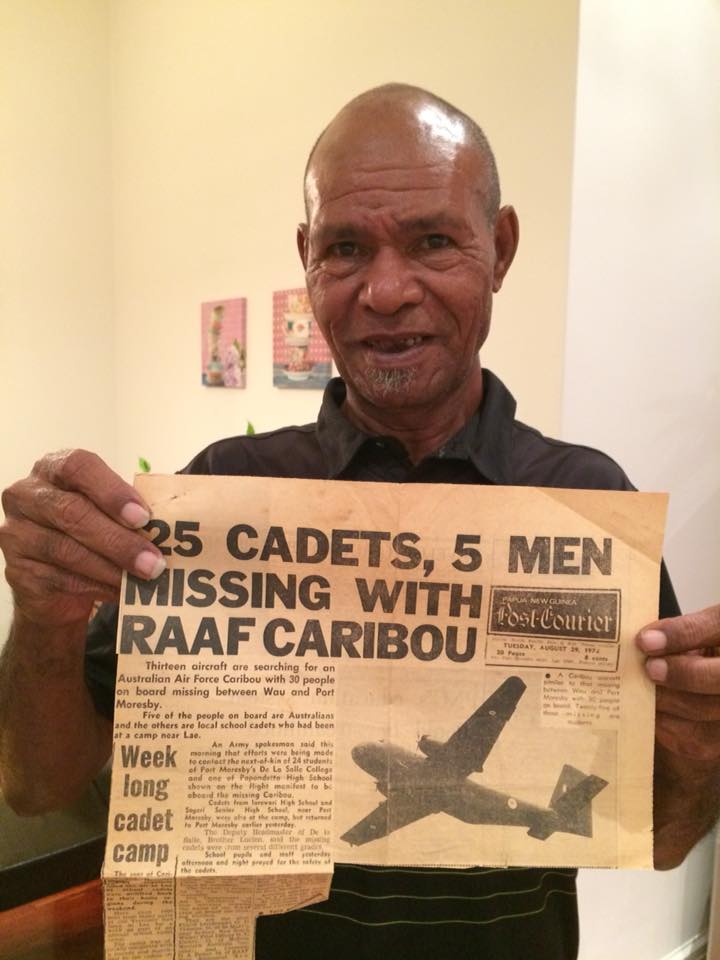
Early assumptions were that there were no survivors. That proved incorrect. Several cadets lived through the crash, some with serious injuries. In the immediate aftermath, cadet Patrick Tau-Gau repeatedly returned to the wreckage to pull injured classmates clear. Over the following days, survivors endured dense jungle, steep terrain, hunger, and injury while attempting to reach help.
Search aircraft and helicopters faced poor weather and thick forest canopy, delaying discovery of the crash site. After several days, survivors were finally sighted and rescued by helicopter. Five cadets initially survived, though one later died from injuries, leaving four long-term survivors. In total, 25 people lost their lives, including all Australian personnel on board and 21 school cadets.
POLICY CHANGES AND LASTING IMPACT
The 1972 Caribou crash had lasting consequences. For the RAAF, it reinforced the dangers of mountain flying in PNG and led to tighter weather minima, improved terrain-awareness procedures, and stricter operational decision-making in marginal conditions. The failure of the manually triggered beacon contributed to the later adoption of automatic emergency locator transmitters on military aircraft.
The tragedy also prompted closer scrutiny of transporting large groups of school cadets on military flights, particularly through high-risk terrain. Risk assessment, supervision, and emergency planning around cadet activities were strengthened in subsequent years. For Papua New Guinea, the crash became part of the quiet human cost of transition to nationhood, shaping attitudes toward safety within institutions that would later form the backbone of the Papua New Guinea Defence Force.
More than five decades on, the 28 August 1972 Caribou crash remains a stark reminder that from tragedy came lessons that improved aviation safety and duty of care across Papua New Guinea and Australia.